Location: Kanutara District, SRI LANKA
Hansa De Soysa has always believed that the best classroom has no ceiling. As the founder of Nerds Against the Odds (NATOS), a volunteer-led organisation based in Sri Lanka, he has spent years finding ways to bring meaningful, hands-on learning to communities that rarely make it onto the radar of large institutional funders. His vision is rooted in a simple conviction: that children who understand the natural world will grow up to protect it. When the opportunity arose to introduce pollinator-friendly gardens to schools in the Kalutara District, he knew that a seed grant, trusted and flexible, could make it real.
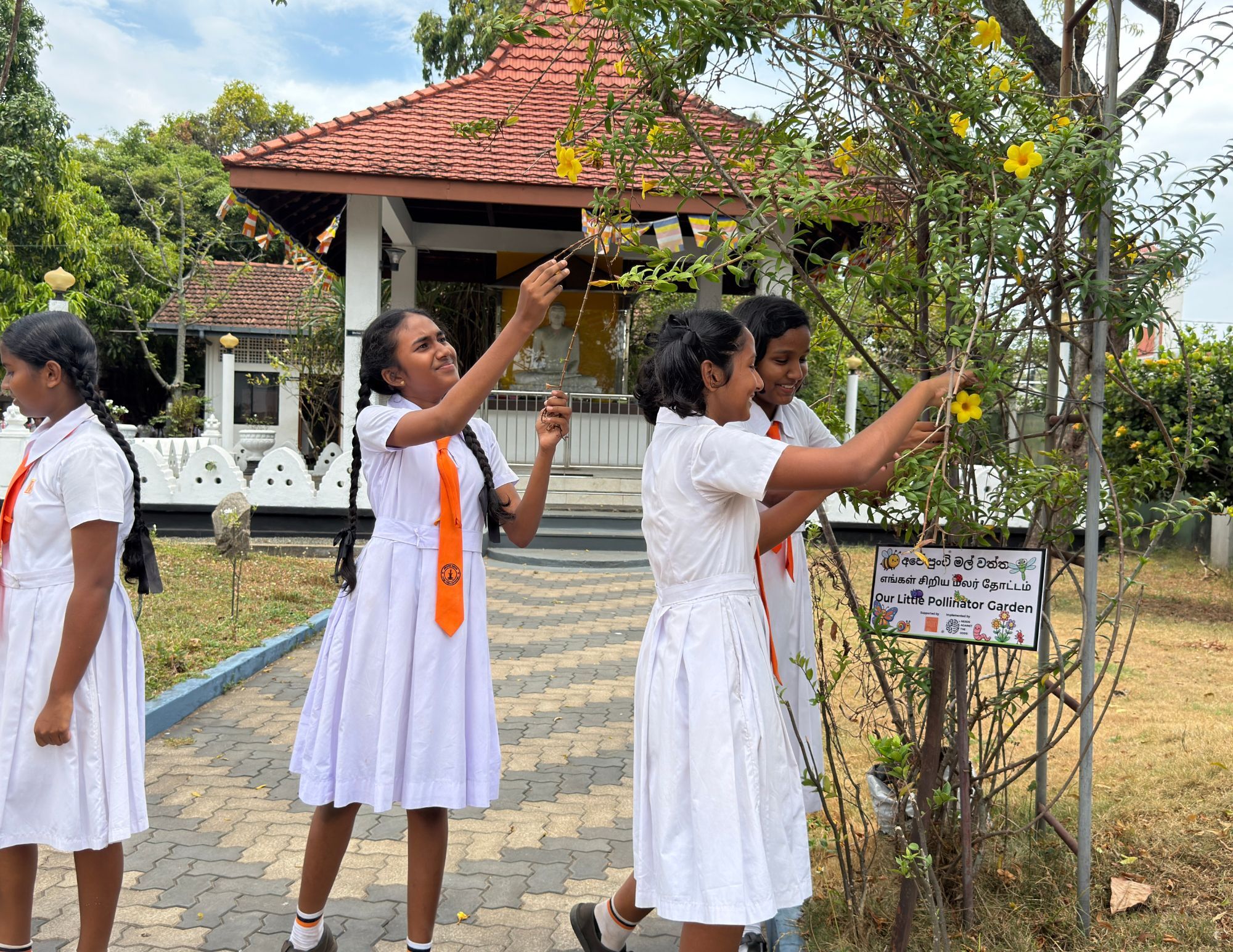
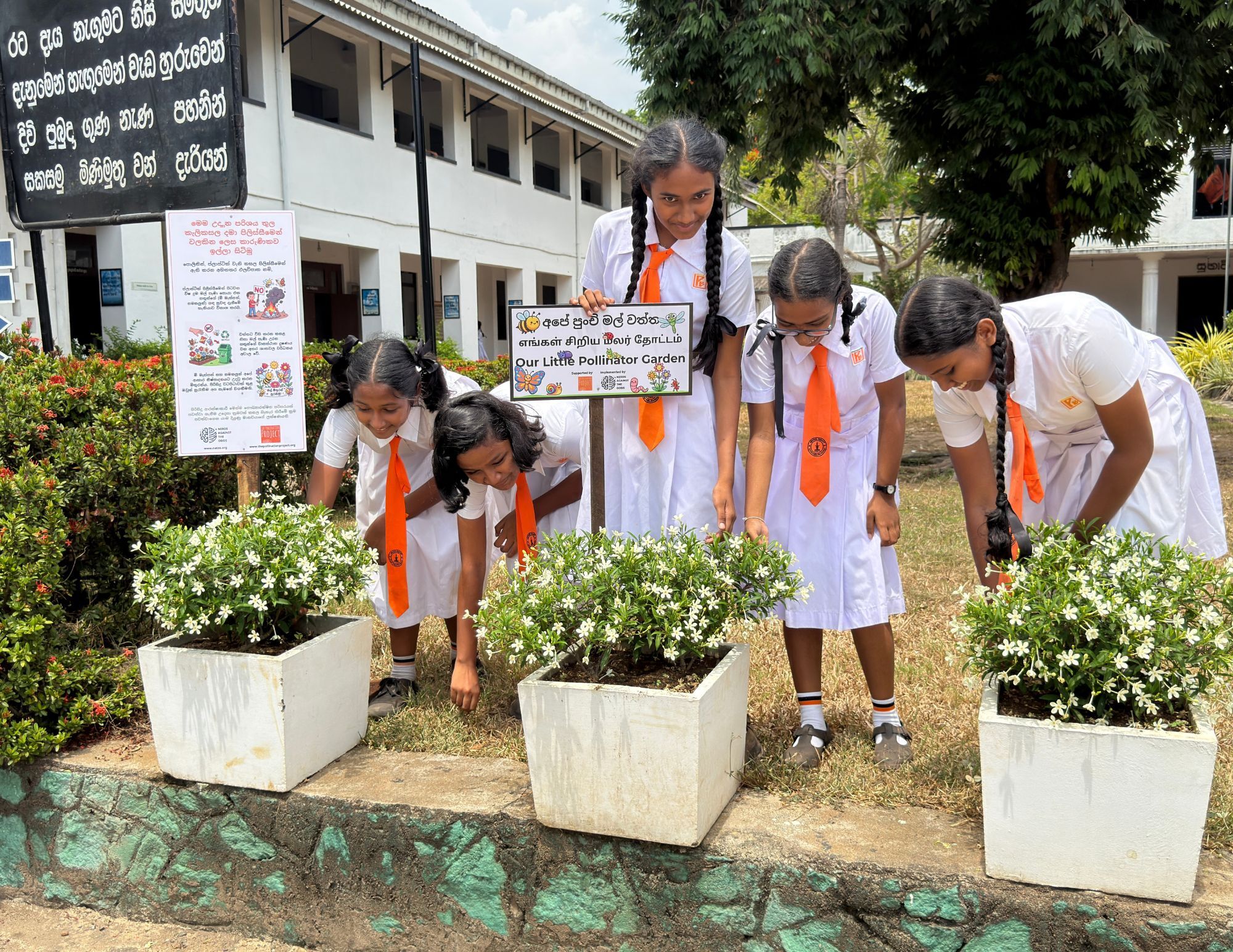
The Pollination Project’s Daily Grant Program provided exactly that foundation. With the support of TPP’s funding, NATOS established five school-based pollinator gardens across the Kalutara District, transforming unused outdoor spaces into living ecosystems and outdoor learning environments. The grant covered native flowering plants, organic fertiliser, gardening tools and equipment, field notebooks for students, and the awareness boards and signage that turned each garden into a public statement about the importance of pollinators to healthy, functioning ecosystems.
“The Pollination Project grant has been one of the most meaningful and flexible grants we have received,” Hansa wrote in his project report. “It gave us the opportunity to introduce urban schools in Kalutara District to the value of pollinators, flowers, and school gardens in a very practical way.”
What the seed grant made possible
What the seed grant made possible was both tangible and enduring. Across five schools, students received gardening forks, gloves, watering cans, trowels, and ropes, giving them the physical tools to take ownership of their plots. Each school received fifty flowering plants in the first distribution, with a second round of thirty plants per school following later in the project. Four bottles of liquid flower fertiliser per school and a monthly supply of organic fertiliser kept the gardens nourishing and productive. Ten field notebooks per school gave students a structured way to record what they were observing: which flowers were blooming, which insects were visiting, how the garden changed across weeks and seasons.
The awareness boards and branding sign boards, costing LKR 74,600 (approximately $252), were among the most visible investments in the project’s long-term sustainability. Placed prominently throughout the school grounds, they communicated the ecological significance of what was growing nearby, educating the wider school community, parents, and visitors about native pollinators, biodiversity, and environmental stewardship. These were not decorations. They were the project’s voice when no one from NATOS was present.
By the end of the grant period, Pollinator Paradise had directly impacted over 1,000 people and an estimated 8,000 animals, including bees, butterflies, and other native pollinators whose foraging habitat had been meaningfully expanded. More than 250 environmental science students per school engaged with the gardens as part of their curriculum, with the initiative reaching student bodies of over 1,600 schoolchildren across participating schools. Sixty volunteer hours were contributed to the project, an investment of time that speaks to the community ownership NATOS had fostered.
Then the Cyclone Came
Then, in November 2025, Cyclone Ditwah struck.
The flooding that swept through the Kalutara District was severe. Many of the garden plots that had been carefully planted and tended were almost entirely destroyed. School closures in the aftermath delayed access, blocked restoration efforts, and compounded the sense of loss for the teams that had worked so hard to build something. For a grassroots project running on volunteer energy and a small seed grant, the scale of the setback could have been terminal.
It was not.
“Even after the gardens were affected by school closures and unforeseen natural disasters,” Hansa reported, “the strong foundation created through the project enabled a swift recovery.”
The NATOS team, working closely with local communities, returned to the affected schools, cleared the damaged areas, and began again. A second round of plant distributions was organised. Resources were redistributed. The same commitment that had built the gardens the first time built them again. The TPP grant’s flexibility, and the trust the Pollination Project extended to its grantees to use funding responsibly and responsively, made that second effort possible. NATOS also drew on its own additional resources to ensure the recovery was complete, a testament to the organisation’s dedication well beyond the scope of the original grant.
“Throughout this period,” Hansa wrote, “the understanding and flexibility shown by the TPP team meant a great deal to us.”
Five Gardens, Still Blooming
Today, the five gardens in the Kalutara District are in full bloom. They function as active habitats for local pollinators and as outdoor classrooms where students continue to observe, record, and learn. The field notebooks distributed to students are filling with observations. The textbooks donated to school libraries are contributing to a culture of long-term knowledge-sharing. The sign boards remain in place, quietly doing their educational work.
Pollinator Paradise was built on the premise that environmental education and conservation belong in schools, close to children, embedded in the rhythms of the school day. That premise held through a cyclone. It holds now.
For the Pollination Project, whose Daily Grant Program is designed precisely to support changemakers like Hansa De Soysa, this is what seed funding looks like when it lands in the right hands: native plants taking root, children bending over field notebooks, and five school gardens in Sri Lanka that were destroyed by floodwaters and came back stronger.
“We are truly grateful for the support,” Hansa said, “and hope to continue sharing the project’s progress with you in the coming months.”
Help More Ideas Take Root
Support more early ideas
Your donation fuels grassroots projects advancing compassion, sustainability, animal welfare, and community-led solutions worldwide.
Have a project like this?
If you’re holding an early idea for change, The Pollination Project is ready to help you bring it to life. Apply for funding!