Location: Nairobi, KENYA
John Nyabwari Nyambane Jr. grew up watching drought devastate farming families across Kenya’s semi-arid regions, a cycle of hunger, livestock loss, and dependency that repeated itself with increasing severity each year. Rather than accept this as inevitable, he chose to reimagine what food security could look like for the communities most affected. A trained sociologist with a Master of Arts in Sociology and Community Development from the University of Nairobi and a Bachelor of Arts in Philosophy from the Catholic University of Eastern Africa, Nyambane channeled his academic background and deep community roots into founding Ethical Transformation Impact (ETI), an organization dedicated to empowering ultra-poor smallholder households to transition toward climate-resilient, plant-based food systems.
His vision was clear: replace dependence on vulnerable livestock-based livelihoods with indigenous, drought-resistant, protein-dense crops like green grams, while equipping communities with the agroecological knowledge and entrepreneurial tools to sustain the shift on their own terms.
What the seed grant made possible
A seed grant from The Pollination Project arrived at a pivotal moment, turning what had been a well-researched concept into a fully operational initiative. The grant funded the formal registration of ETI as a nonprofit organization in Kenya, a critical first step that gave the project legal standing and institutional credibility. It also covered the purchase of a manual grinder for small-scale food processing, venue hire for community food demonstrations, printing of educational materials including posters and booklets, transportation to reach remote households, field engagement with farming communities, training materials on agroecology, nutrition, and entrepreneurship, snacks for community gatherings, and essential administrative expenses.
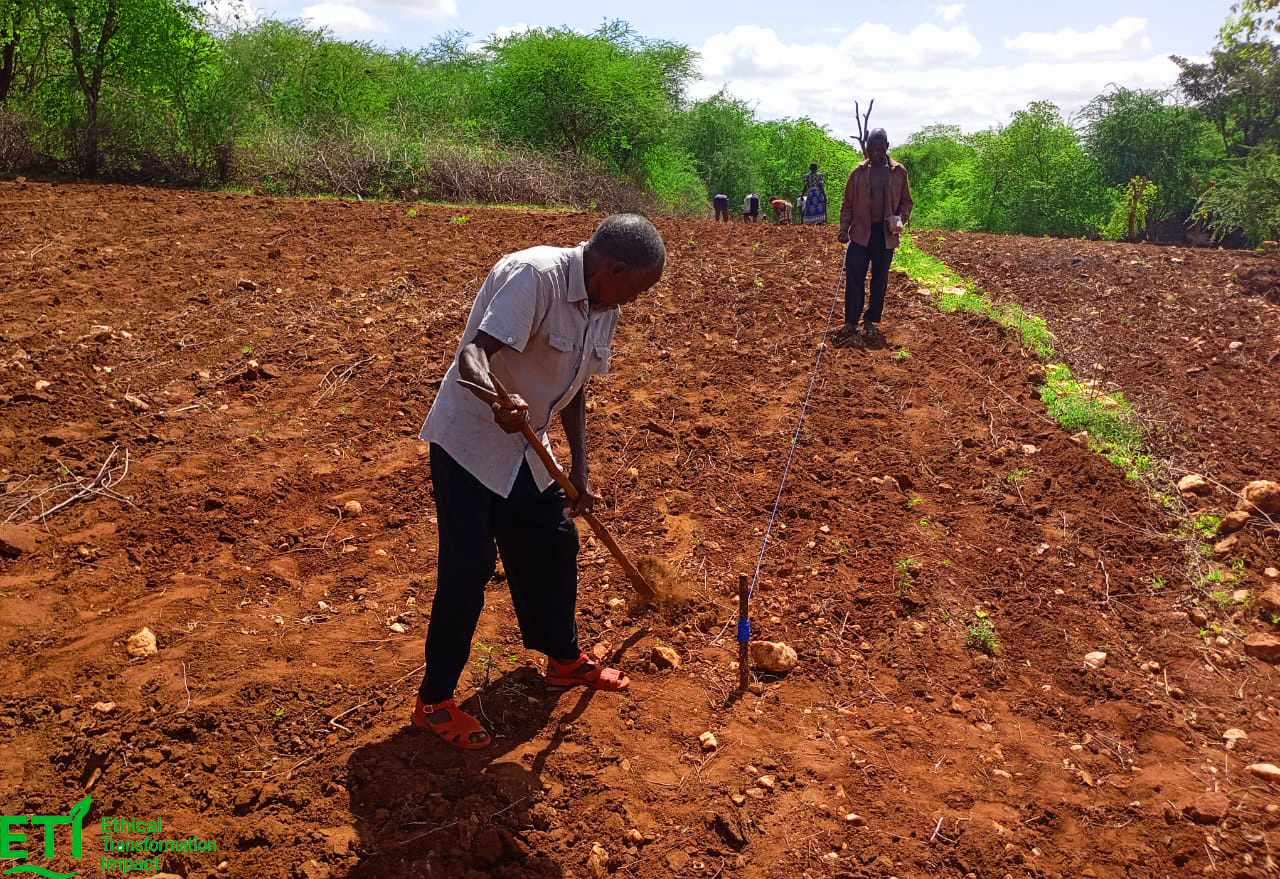
With these resources in place, Nyambane and his team trained 30 rural women farmers in Tharaka Nithi County in agroecological practices and plant-based farming techniques, helping them transition away from livestock-dependent production. These women, many of them from ultra-poor households, learned to cultivate indigenous protein-rich crops using sustainable methods suited to their drought-prone environment. Consultative meetings and hands-on planting sessions strengthened local participation and built a sense of community ownership that extended well beyond the training itself. The initiative also partnered with Ethical Seafood Research, a fellow Pollination Project grantee, to train 246 fish farmers using the FAI digital welfare platform, significantly expanding the project’s reach into animal welfare practices. Altogether, the project directly reached 297 people and impacted an estimated 123,000 animals, while generating $500 in project income and mobilizing 7,800 volunteer hours.
“The seed funding served as a catalyst that transformed a concept into a functioning initiative with measurable impact,” Nyambane shared. “Through this grant, we were able not only to implement the Tharaka Alternative Protein Initiative but also to establish Ethical Transformation Impact as a platform capable of scaling plant-based, climate-smart, and animal-friendly solutions across Kenya.”
Building the Next Generation of Food System Leaders
In parallel with the rural farming initiative, ETI launched the Nairobi Just Food Systems Leadership Program, a six-week plant-based leadership curriculum delivered in partnership with New Roots Institute. The program trained 21 university students from 11 universities across Kenya, equipping young leaders to advocate for plant-forward diets and institutional food change within their campuses and communities. The program seeded a new generation of advocates who understand the intersections between food justice, climate resilience, animal welfare, and public health.
Nyambane also secured seed support from Vegan Hub Africa, which provided seeds valued at approximately KSh 5,000 ($38) for farmer production, and introduced the Youth Changemakers Club to Kenya through a partnership with Living Kind, further extending the initiative’s educational footprint among young people.
Recognition and Growing Momentum
The impact of this grassroots philanthropy effort did not go unnoticed. ETI’s work was featured in the BRICS G20 magazine in a special edition article titled “Sowing Seeds of Sovereignty: How the BRICS Can Empower Rural Communities Through Sustainable Agriculture,” as well as by Kenya’s Standard Media Group, bringing national and international visibility to the plant-based food systems movement emerging from Tharaka Nithi County.
“The support from TPP strengthened our credibility, enabled strategic partnerships, and positioned our organization for long-term sustainability and expansion,” Nyambane reflected.
The Road Ahead
Looking ahead, Nyambane plans to launch the Decolonizing Diets Campus Fellowship, building on the momentum of the pilot university program. The fellowship will train 30 university students as plant-based and animal welfare advocates, expand outreach to five to ten campuses, and support fellows with mentorship, training resources, and small project funding for advocacy campaigns encouraging plant-based diets and institutional food shifts. The Tharaka Alternative Protein Initiative will continue as a rural demonstration hub for sustainable agriculture, while new partnerships with universities, nutrition experts, and advocacy organizations deepen the project’s reach.
“We are deeply grateful to TPP for believing in our vision at an early stage,” Nyambane said. “We remain committed to maximizing the impact of this investment and look forward to building on this foundation through continued collaboration.”
Help More Ideas Take Root
Support more early ideas
Your donation fuels grassroots projects advancing compassion, sustainability, animal welfare, and community-led solutions worldwide.
Have a project like this?
If you’re holding an early idea for change, The Pollination Project is ready to help you bring it to life. Apply for funding!