Hope Matoomana Mkunte grew up watching trees disappear. Across Chongwe District, where agriculture and charcoal production have stripped hillsides bare for decades, the land he knew as a child has grown thinner, hotter, and harder to farm. His response was not to leave, but to plant. Green Gold Social Initiative, the grassroots organisation he founded, has made a singular bet: that restoring native trees to rural Zambia is among the most powerful things a community can do for its own future, and that communities themselves are best placed to do it.
A seed grant from The Pollination Project gave him the capital to prove it.
With philanthropic support from TPP’s Daily Grant Program, Mkunte launched the Chongwe Reforestation Initiative, a nine-month project that planted 17,081 indigenous trees, delivered climate education workshops at four schools, established a permanent on-site tree nursery, and employed five young people from Chisengo village in grow-bag production, all on a budget of $1,000.
“The TPP grant didn’t just fund tree planting. It gave us the infrastructure to scale — grow bags, trained youth, community trust. That foundation is now permanent.”
What the seed grant made possible
Before the TPP grant, Green Gold Social had the vision and the relationships, but not the working capital to act on them. The grant closed that gap entirely.
Mkunte’s team began by establishing a grow-bag production system at Chisengo village, putting five young people to work producing the seedling sleeves that give saplings stronger root systems and dramatically improve their survival rate after planting. A practical skill, and a foundation for every future season.
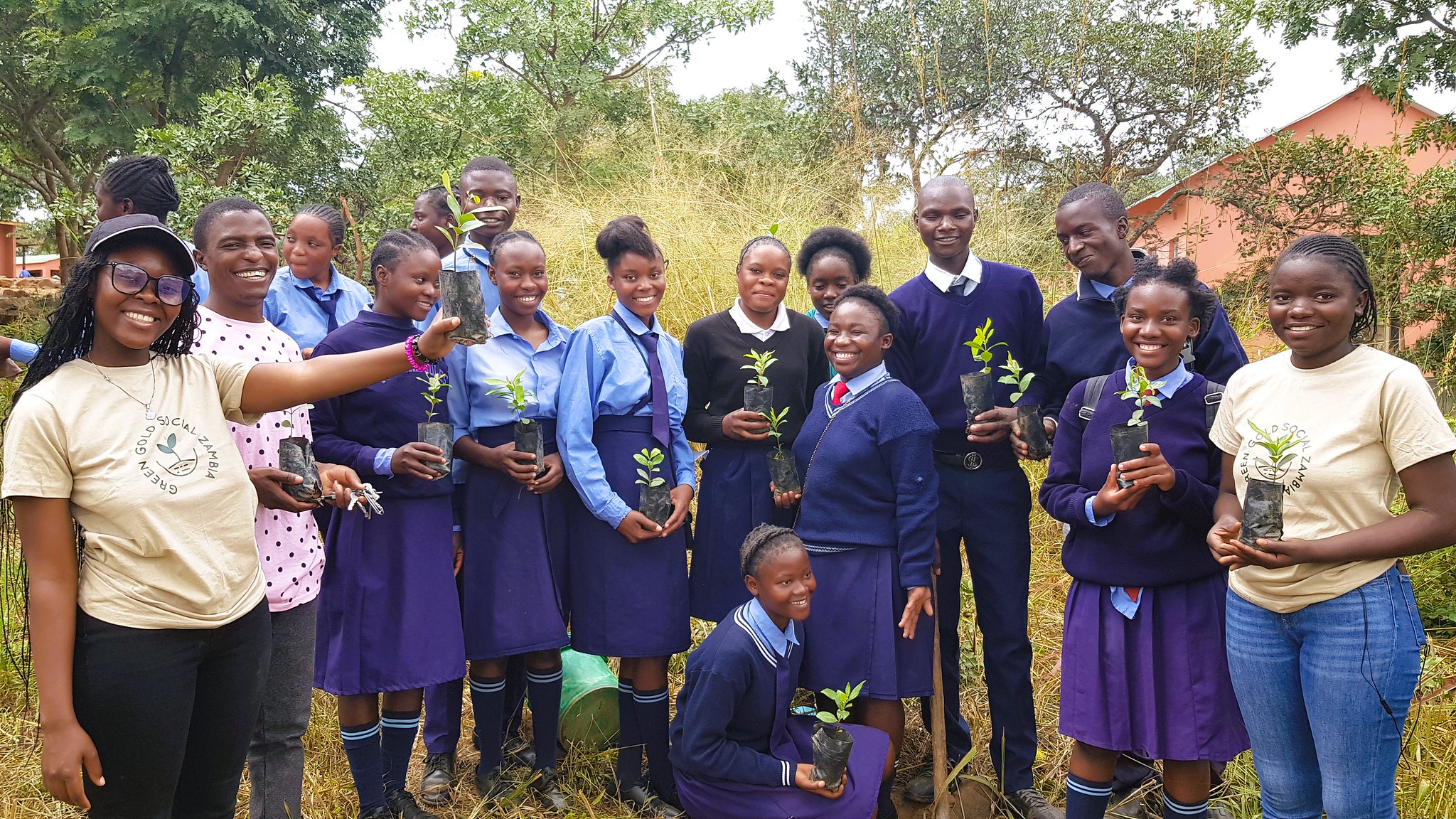
At four schools across Chongwe, climate workshops combined environmental education with hands-on planting, reaching 350 students. At Bimbe Primary, 81 Musiniga trees went in the ground, planted by the children who will grow up in their shade. At AVOH, one of the district’s largest schools, a formal nursery partnership was signed, creating an institutional anchor for reforestation education beyond any single grant cycle.
The project culminated in February 2026, when village leadership, youth volunteers, and community members gathered at Chisengo and planted 17,000 indigenous trees across two days. 455 people directly reached. 420 volunteer hours given freely.
“When the village comes together to plant 17,000 trees in two days, something shifts. This is no longer a project. It belongs to them.”
The challenge of doing more with less
A living legacy, just in time for Earth Day
As Earth Day approaches on April 22, the 17,000 trees planted at Chisengo village stand as a vivid, countable example of what community-led environmental philanthropy can accomplish when a small, targeted grant meets deep local knowledge and genuine community ownership. The grow-bag production system now running at Chisengo is permanent infrastructure for every future planting season. The five youth trained in production carry skills and income potential that extend well beyond the grant period. And the village leadership who co-planned and co-hosted the February event are now the stewards of what they planted together.
Green Gold Social’s next goal is to scale the Chongwe Reforestation Project to 100,000 trees and expand to ten more villages. The infrastructure is already in place. The community relationships are already built. What the project needs now is what the TPP grant first provided: funding that trusts the people closest to the land to know how best to restore it.
The Pollination Project’s model of small, trust-based seed grants to individual changemakers is precisely what made this possible. No large institution, no lengthy approval process, no requirement to already be significant before being treated as significant. Just a grant, a vision, and the freedom to act.
For the forests that have been disappearing from Chongwe for decades, Hope Mkunte and his community are making sure the story turns around.
Help More Ideas Take Root
Support more early ideas
Your donation fuels grassroots projects advancing compassion, sustainability, animal welfare, and community-led solutions worldwide.
Have a project like this?
If you’re holding an early idea for change, The Pollination Project is ready to help you bring it to life. Apply for funding!