Girls for Green Plates: a Youth-Led Food Justice Movement in Cameroon

by | Jun 12, 2026 | Empowerment of Women and Girls, Health and Wholeness, ShiftHappens

Location: Bamenda, CAMEROON

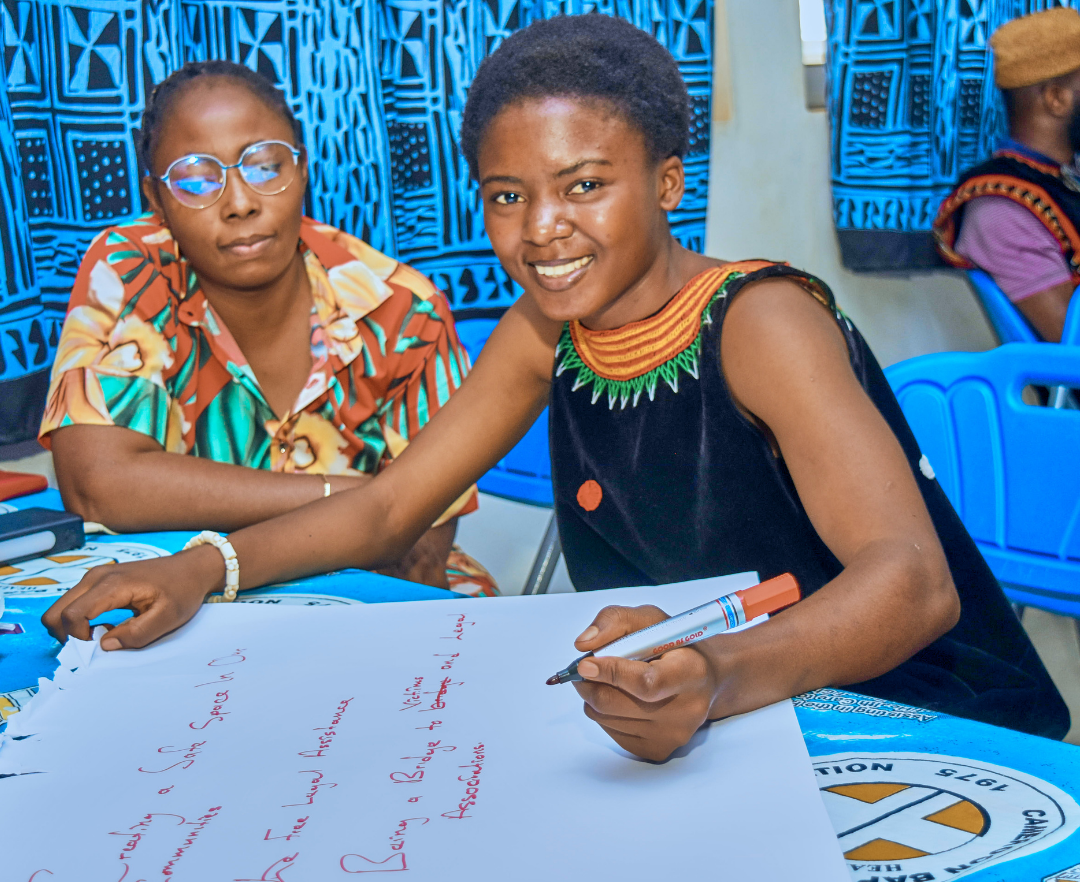
Ndum Charlotte Ayeah knows that change begins with a conversation, and that the right conversation, held in a safe space, can shift the way a community thinks, eats, and leads. As Team Lead of the Association of Adolescent Girls and Young Women Cameroon (AAGYW Cameroon), she has built her organization around a simple but powerful conviction: adolescent girls and young women are not passive recipients of support. They are agents of transformation, capable of reshaping the choices, habits, and futures of entire households and communities.

When Charlotte brought the Girls for Green Plates initiative to life in Bamenda, in Cameroon’s conflict-affected Northwest Region, she was responding to something she saw every day: young women navigating food insecurity, poor nutritional awareness, and the invisible weight of crisis, often with no platform to speak, lead, or learn. Her vision was to change that, using nutrition education, peer learning, and community storytelling to build both healthier habits and stronger voices.

School children holding signs

What the seed grant made possible

With a seed grant from The Pollination Project, AAGYW Cameroon was able to bring Girls for Green Plates from concept to community. The grant covered everything needed to reach real people in a real place: venue support for sessions, participant refreshments, facilitator stipends, printed educational materials, plant-based food ingredients for live demonstrations, transportation for facilitators and participants, and the foundational materials to launch a Green Plate Club.

Across three structured sessions held between September 2025 and March 2026, the project reached 85 adolescent girls, young women, and community participants directly. Each session built on the last: the first focused on nutrition and plant-forward diets, the second explored food justice, sustainability, and storytelling, and the third translated knowledge into practical action and community advocacy. Sixty volunteer hours were contributed to making those sessions happen.

“Beyond the funding itself,” Charlotte reflected in her project report, “the experience made young women in our community feel seen, valued, and supported to lead meaningful conversations around nutrition, sustainability, and wellbeing.”

Food Justice as a Framework

Girls for Green Plates grounded its work in food justice, treating access to healthy, sustainable food not as a personal lifestyle choice but as a community right, especially for those living through conflict and displacement. The project recognized that adolescent girls and young women bear a disproportionate share of food insecurity, and that they also hold disproportionate influence over household food choices, making them a strategic and powerful entry point for change.

Sessions were designed to be accessible, participatory, and rooted in local reality. Educational materials were printed in formats participants could take home. Plant-based food demonstrations used ingredients from local markets, making the shift to more sustainable eating feel practical and affordable rather than aspirational or distant. Peer education, storytelling circles, and community dialogue created space not just for learning but for connection, building the social infrastructure that allows behavior change to take hold.

Growing Through Adversity

Implementation in a conflict-affected environment is never straightforward, and the Girls for Green Plates team encountered the full weight of that reality. Insecurity disrupted timelines, transportation costs exceeded initial estimates, some participants faced barriers related to household responsibilities and school schedules, and privacy concerns in a volatile setting meant that documentation, including photos and videos, required careful handling and respect for individual boundaries.

Three of the originally planned sessions were successfully completed. Rather than framing this as a shortfall, Charlotte’s team treated it as a lesson in realistic, community-centered planning, one that strengthened their capacity for future work. The project report is candid about what was learned: stronger needs assessments, more detailed community cost analyses, and flexible timelines are essential tools when working in crisis contexts.

The Pollination Project’s willingness to extend the project timeline when circumstances demanded it was meaningful beyond logistics.

“We especially appreciated the understanding and flexibility provided when we requested a project extension due to contextual challenges,” Charlotte wrote. That flexibility is what enables grassroots changemakers to keep going when the ground shifts beneath them.

Students in a classroom in Rwanda

A Seed That Keeps Growing

The Girls for Green Plates grant was, as Charlotte noted, one of AAGYW Cameroon’s first. That distinction matters. Early-stage funding from a philanthropic organization like The Pollination Project does something specific and rare: it signals institutional trust in a young, locally rooted organization before it has the track record that larger funders typically require. That trust builds confidence, strengthens capacity, and creates the foundation for future growth.

The next steps for the project are already in motion. AAGYW Cameroon plans to expand the Green Plate Club established through this grant, scale awareness sessions to reach more young women, build community partnerships around nutrition and sustainable food, and introduce more hands-on learning opportunities within schools. The seed, in other words, has taken root.

Help More Ideas Take Root

Support more early ideas
Your donation fuels grassroots projects advancing compassion, sustainability, animal welfare, and community-led solutions worldwide.

Have a project like this?
If you’re holding an early idea for change, The Pollination Project is ready to help you bring it to life. Apply for funding!