Location: Maharashtra, INDIA
Shrishail Basveshwar Birajdar knows what it means to grow up without books. He came of age surrounded by violence, crime, and drug abuse, and it was the simple act of listening to stories at school that changed the direction of his life. Reading became his refuge, then his purpose. It sharpened his communication skills, strengthened his academic performance, and gave him a reason to imagine a future beyond his circumstances. He went on to earn a degree in Psychology, complete advanced training in social work, and finish multiple leadership programs, building a twelve year career that spans the social, corporate, and government sectors.
In 2023, a chance encounter with a young entrepreneur who rented out books to neighbors planted a new idea in Birajdar’s mind. He saw the potential to turn that small transaction into something far bigger, a social enterprise built around children’s access to knowledge. That idea became Reader’s Sanctuary, a project of the Lead Read Foundation based in Kothrud, Pune, designed to give children in underserved communities the tools to explore academic opportunities, career paths, and a life of dignity through the power of storytelling and reading.
“I believe that book reading habits will also inspire them to dream big and achieve it,” Birajdar said, describing the philosophy that drives every session at Reader’s Sanctuary.
What the seed grant made possible
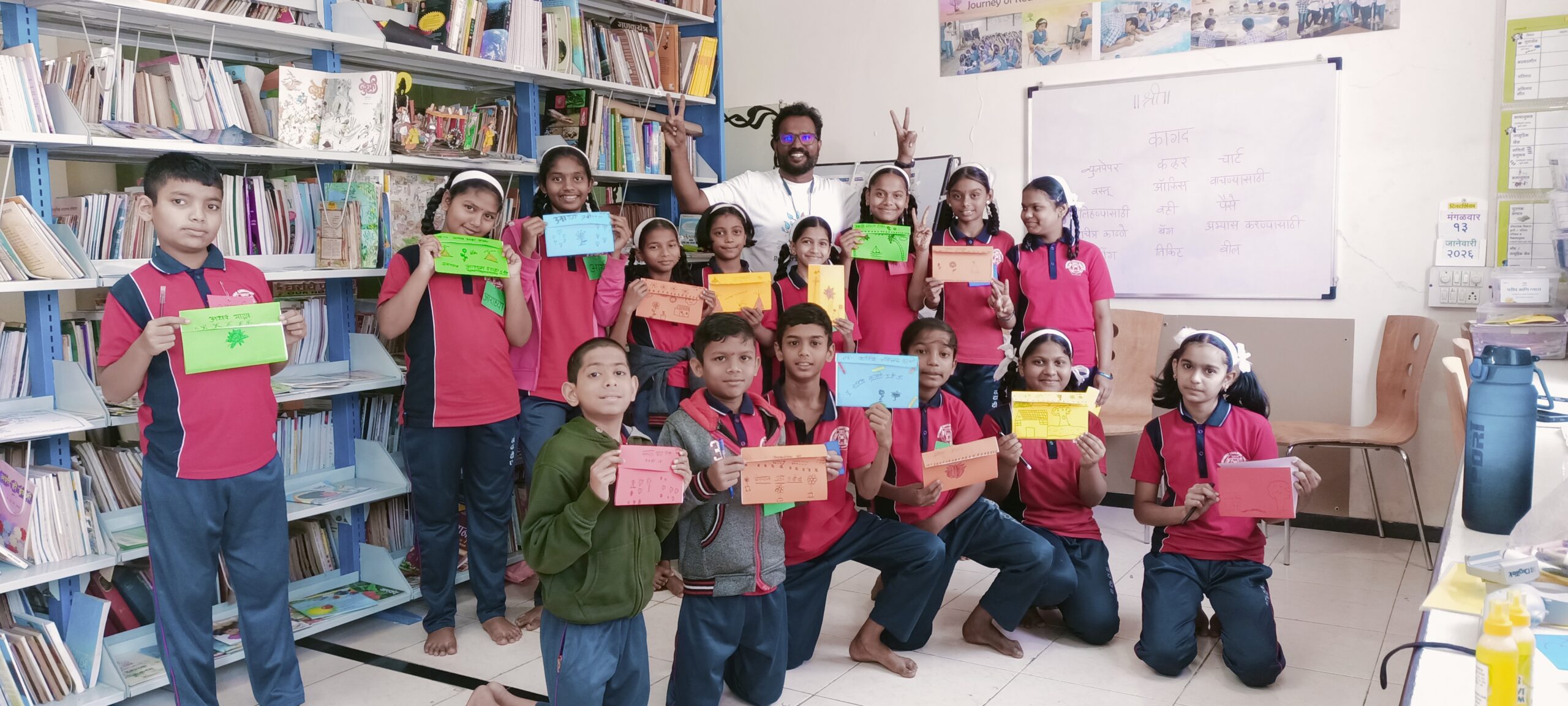
The Pollination Project’s grant gave Reader’s Sanctuary the resources to build a genuine reading ecosystem rather than a one time book drive. Grant funds were used to purchase more than a hundred children’s books in Marathi, Hindi, and English across multiple reading levels, along with essential stationery, a bookshelf kit to organize the growing library, a library issue register to track borrowing, and a Bluetooth speaker to support interactive storytelling sessions. Every rupee was directed toward creating a physical and emotional space where children could encounter stories that reflected their own lives and stretched their imaginations beyond them.
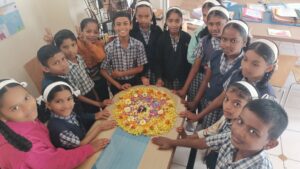
That investment reached more than 200 children between Grade 5 and Grade 10, across two divisions in each grade, in classrooms averaging thirty to thirty eight students. It also mobilized 240 volunteer hours from community members who showed up week after week to read aloud, listen, and encourage. For a grassroots literacy project working with children from low income households, this kind of sustained, hands on investment in books and community engagement is often the hardest funding to secure, and it is exactly where seed grant philanthropy makes its deepest mark.
A story that captures the mission
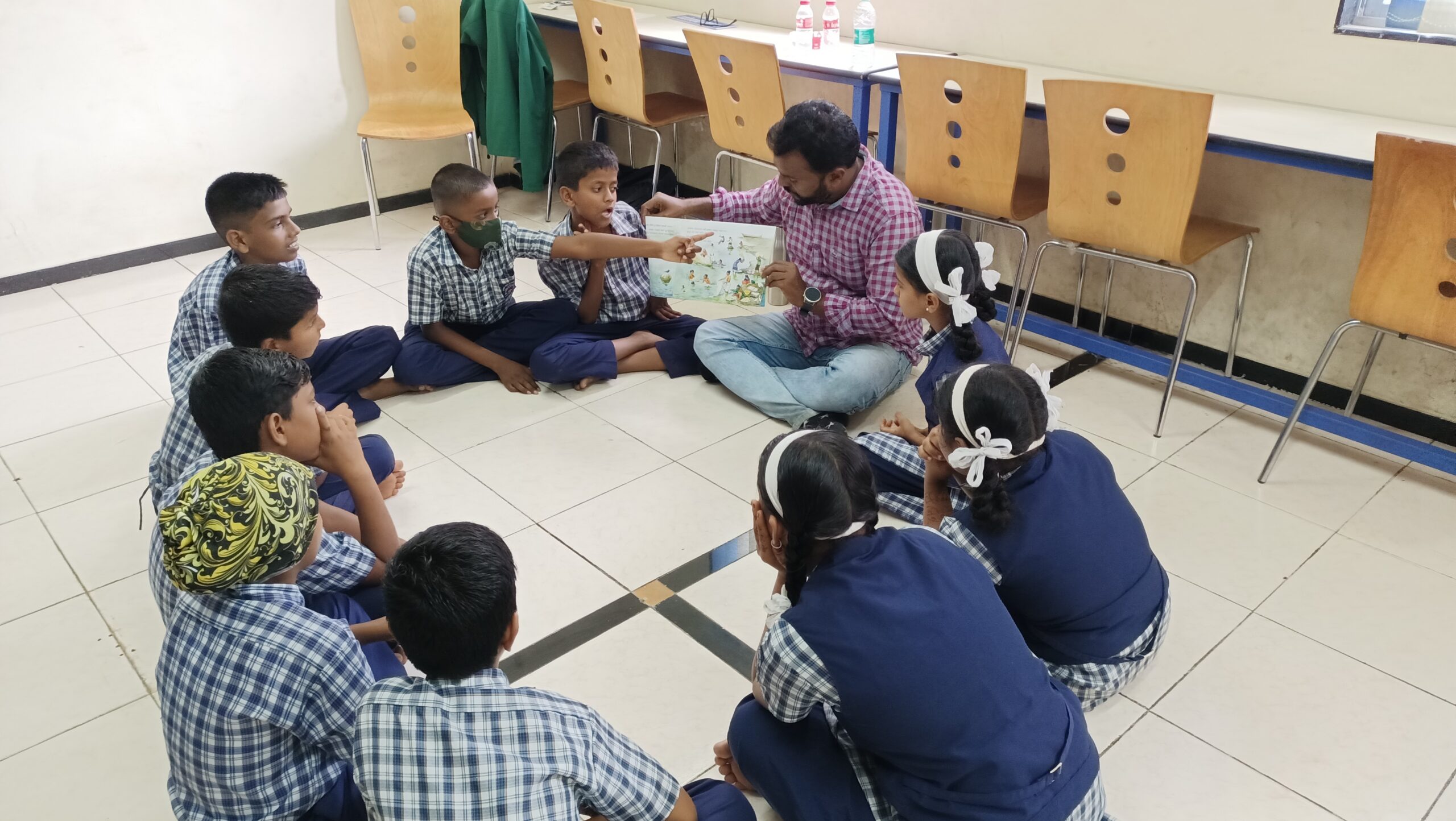
Nowhere is the project’s impact more visible than in the story of Deoyani, an eight year old girl who joined Reader’s Sanctuary as a disruptive, restless presence, prone to fighting with other children and unable to sit still through a session. Slowly, something shifted. She began listening to stories, then picking up picture books on her own, then reading aloud to the younger children around her. Eventually, she started composing her own short stories drawn from her lived experience. In one photograph shared by the project, Deoyani holds a storybook created together with the Reader’s Sanctuary team, one built entirely from her own memories.
“This moment is very special for us because it shows her journey, from being disruptive in sessions to becoming a confident and interested reader and storyteller,” the team shared.
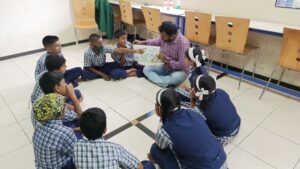
That transformation did not happen by accident. Facilitators built simple but rigorous methods to track it, maintaining attendance records, developing observation rubrics to measure changes in vocabulary and reading confidence, running informal comprehension checks, and monitoring how often children chose to borrow books independently. Feedback from children, volunteers, and facilitators rounded out a picture of early impact that goes beyond attendance numbers and speaks to genuine behavioral and emotional change.
Facing real barriers with community solutions
The biggest obstacle Reader’s Sanctuary faced was never a shortage of books. It was mindset. Many children arrived from homes with no storybooks at all, where reading was associated only with exams and survival took priority over enrichment. Convincing parents and the wider community that storytelling had value took patient, ongoing conversation. Finding adequate physical space for sessions was a persistent logistical challenge, and keeping both volunteers and children consistently engaged required constant effort, since enthusiasm from new volunteers often faded as life responsibilities took over, and children carried their own emotional burdens that sometimes surfaced as distraction.
Facilitators without prior experience working with children from slum communities initially struggled to make storytelling sessions feel relevant and engaging. Through repeated practice and closer relationships with the children themselves, they developed the skill and cultural fluency needed to create an environment where kids wanted to stay and participate.
Looking ahead, the Lead Read Foundation plans to introduce a hundred new books spanning biographies, folk tales, and activity based formats, expand programming to include creative writing, role play, and book based games, and launch a pilot Foundation Literacy Project focused on children who struggle with basic reading and writing in Marathi. For an organization built entirely around the belief that a single book can change a life’s trajectory, The Pollination Project’s grant was not just funding. It was validation that grassroots literacy work in India’s underserved communities deserves the kind of trust that lets a founder build boldly.
“Our experience with TPP has been very encouraging and supportive,” Birajdar said. “This is the first grant we received, which helped us to kickstart our reading space and bring quality books and storytelling to children who otherwise had very limited access.”
Help More Ideas Take Root
Support more early ideas
Your donation fuels grassroots projects advancing compassion, sustainability, animal welfare, and community-led solutions worldwide.
Have a project like this?
If you’re holding an early idea for change, The Pollination Project is ready to help you bring it to life. Apply for funding!