Location: Tamale, GHANA
Francisca Biawurbi Anobila leads Hope for Children, Power for the Youth Ghana (HOCPY Ghana), a youth-led organization working in the rural communities around Tamale, in Ghana’s Northern Region. Her vision was simple and ambitious at once, to help schoolchildren understand that a healthy plate does not need to be a meat-heavy one. Many of the pupils she works with come from farming families where meat is seen as the only marker of good nutrition, a belief she set out to gently unravel through food that is affordable, local, and already growing in their own backyards.
With support from a seed grant awarded by The Pollination Project, that vision became the Green Meals for Change project, a nutrition and sustainable food systems initiative that reached two primary schools, hundreds of children, and a community eager for practical, lasting change.
What the seed grant made possible
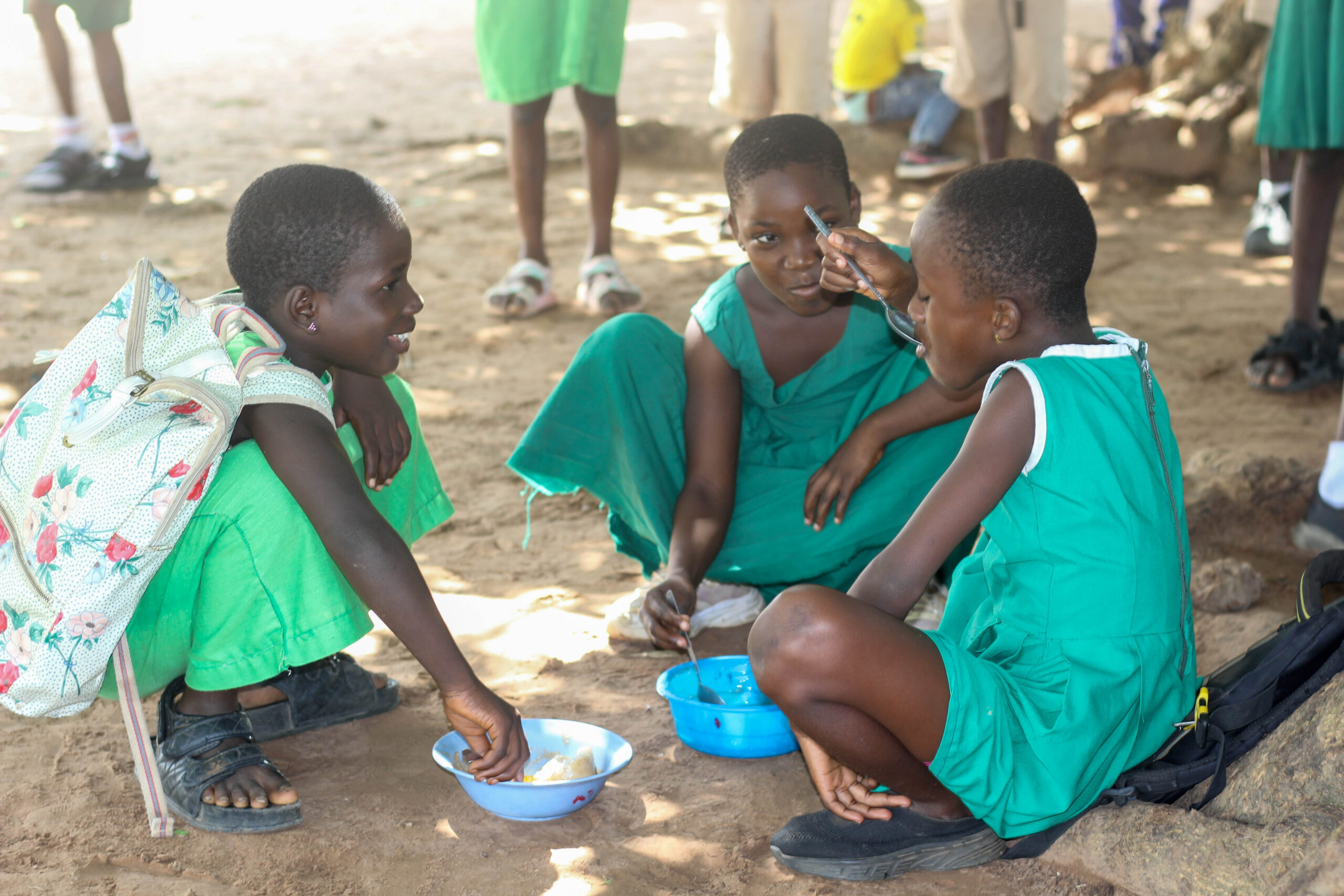
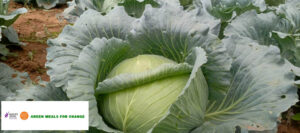
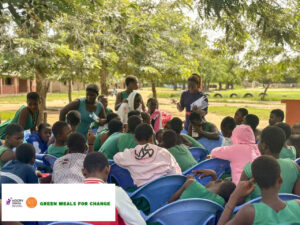
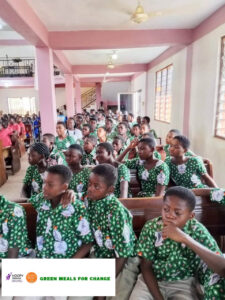
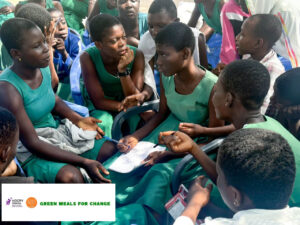
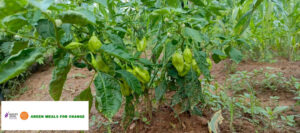
The TPP grant gave HOCPY Ghana the resources to design and deliver six hands on training sessions, three at Sankagla M.A. Primary School and three at Zanzugu Yipa D.A. Primary School, teaching pupils and their teachers about the nutritional value of locally available vegetables and plant-based meals. It also funded something the schools did not have before, working gardens. Two school gardens were established as part of the project, giving caterers a steady supply of fresh vegetables that could be folded directly into meals served under Ghana’s National School Feeding Programme.
Facilitators were paid for their time, transport was covered for the project team traveling between rural sites, and simple tools like watering cans and vegetable seeds turned bare plots into productive growing spaces. None of this required a large budget, and Francisca and her team stretched every cedi carefully, but the seed grant was the spark that got the gardens planted and the training rooms filled.
“We are sincerely grateful to The Pollination Project for supporting the Green Meals for Change Project,” Francisca shared. “The project demonstrated that even modest support can create meaningful change within schools and communities.”
Growing Nutrition Ambassadors
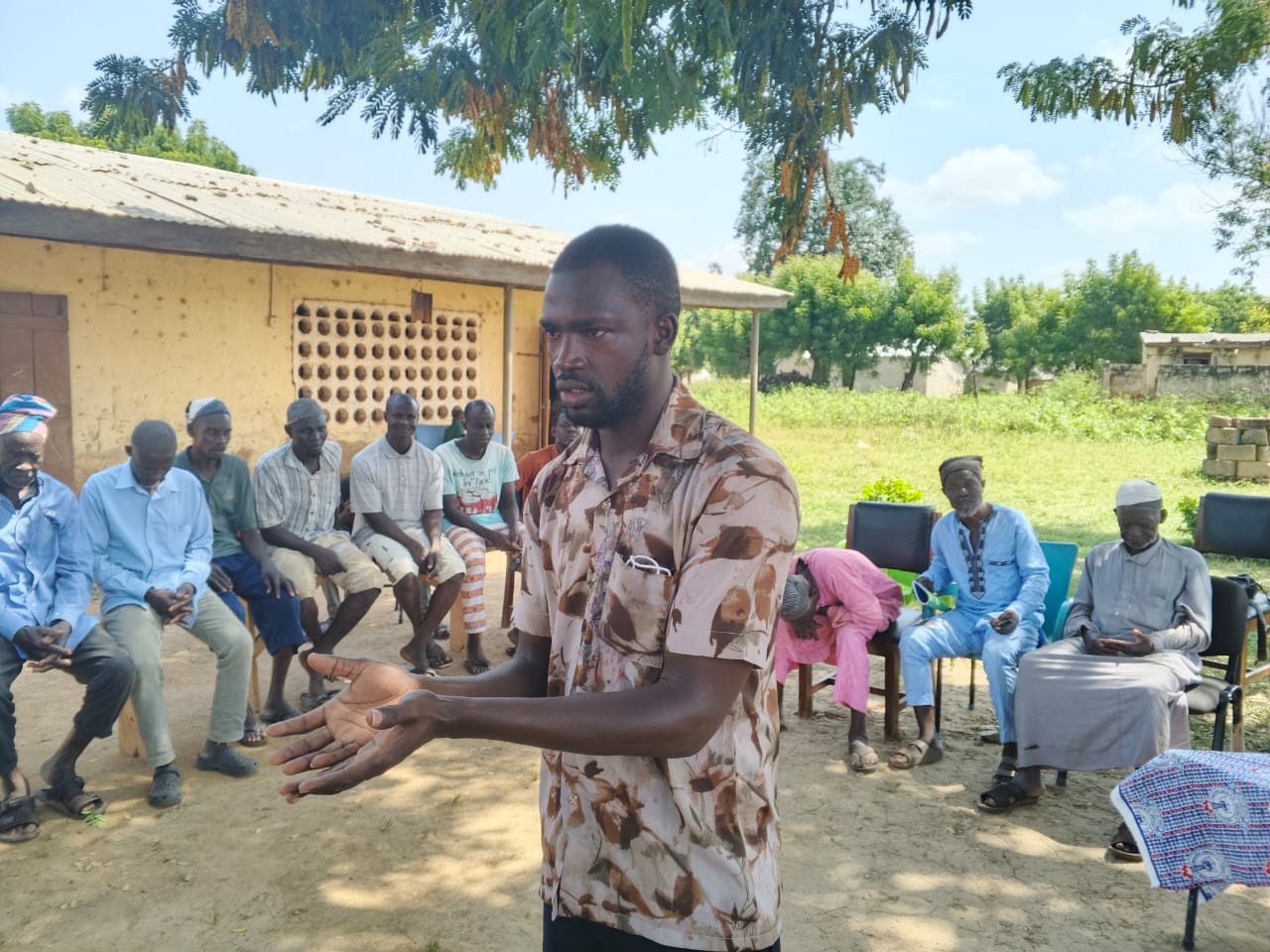
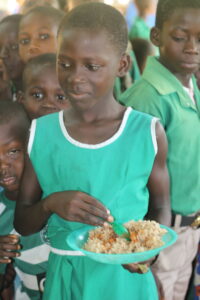
The heart of the project was always the children themselves. Through interactive lessons on healthy eating and sustainable food practices, pupils learned to prepare simple, nutritious meals using ingredients they could find at home, and many carried that knowledge straight back to their families. Some of the pupils who once believed meat was the only route to good health began asking their parents to try the vegetable dishes they had learned to cook in class, effectively becoming the household’s own nutrition advocates. Teachers noticed the shift too, reporting greater curiosity among pupils about vegetable gardening and plant-based food, and a growing appreciation for the produce grown just outside their classroom windows.
In total, the project directly reached 310 people, calculated from six training sessions with fifty pupils and eight recurring teachers each, plus two school caterers who now incorporate garden vegetables into daily meals. Over 2,400 volunteer hours went into facilitating sessions, tending gardens, and coordinating logistics across communities that are not always easy to reach.
A Foundation That Outlasts the Grant
What makes Green Meals for Change distinct is that its impact was designed to keep growing after the grant funding ended. The school gardens remain in place as living classrooms, giving pupils an ongoing source of fresh vegetables and a reason to keep practicing what they learned.
HOCPY Ghana plans to support teachers and pupils in maintaining those gardens, encourage schools to fold nutrition education into their regular programming, and expand the model into more communities across the Central Gonja District. The ripple effects reached beyond the classroom as well, the project’s success and visibility helped HOCPY Ghana earn admission into the Coalition of NGOs in Health in Ghana, opening new doors for partnership and collaboration in the health and development sector, and it drew local media attention, including coverage of the project’s harvest celebration.
For a grassroots organization working with rural, often overlooked communities, that kind of recognition, paired with two thriving school gardens and a generation of children rethinking what belongs on their plate, is exactly the kind of change a small seed grant is meant to grow.
Help More Ideas Take Root
Support more early ideas
Your donation fuels grassroots projects advancing compassion, sustainability, animal welfare, and community-led solutions worldwide.
Have a project like this?
If you’re holding an early idea for change, The Pollination Project is ready to help you bring it to life. Apply for funding!