Location: New Delhi,India
When Dr. Mona Yadav stood outside India Gate in 2012, tear gas thick in the air, she was one voice among thousands demanding justice after the Delhi gang rape. That day reshaped her. Four years later, she and co-founder Purvi turned that reshaping into Sahas Foundation, a Delhi-based organization built on a single conviction: adolescents deserve the knowledge and courage to challenge gender-based violence before it takes root in their lives.
Ten years later, Sahas has reached over 11,000 people across seven states and three union territories in India, and the seed grant that helped make it possible traces back to The Pollination Project.
A Seed Grant That Kept the Dream Alive
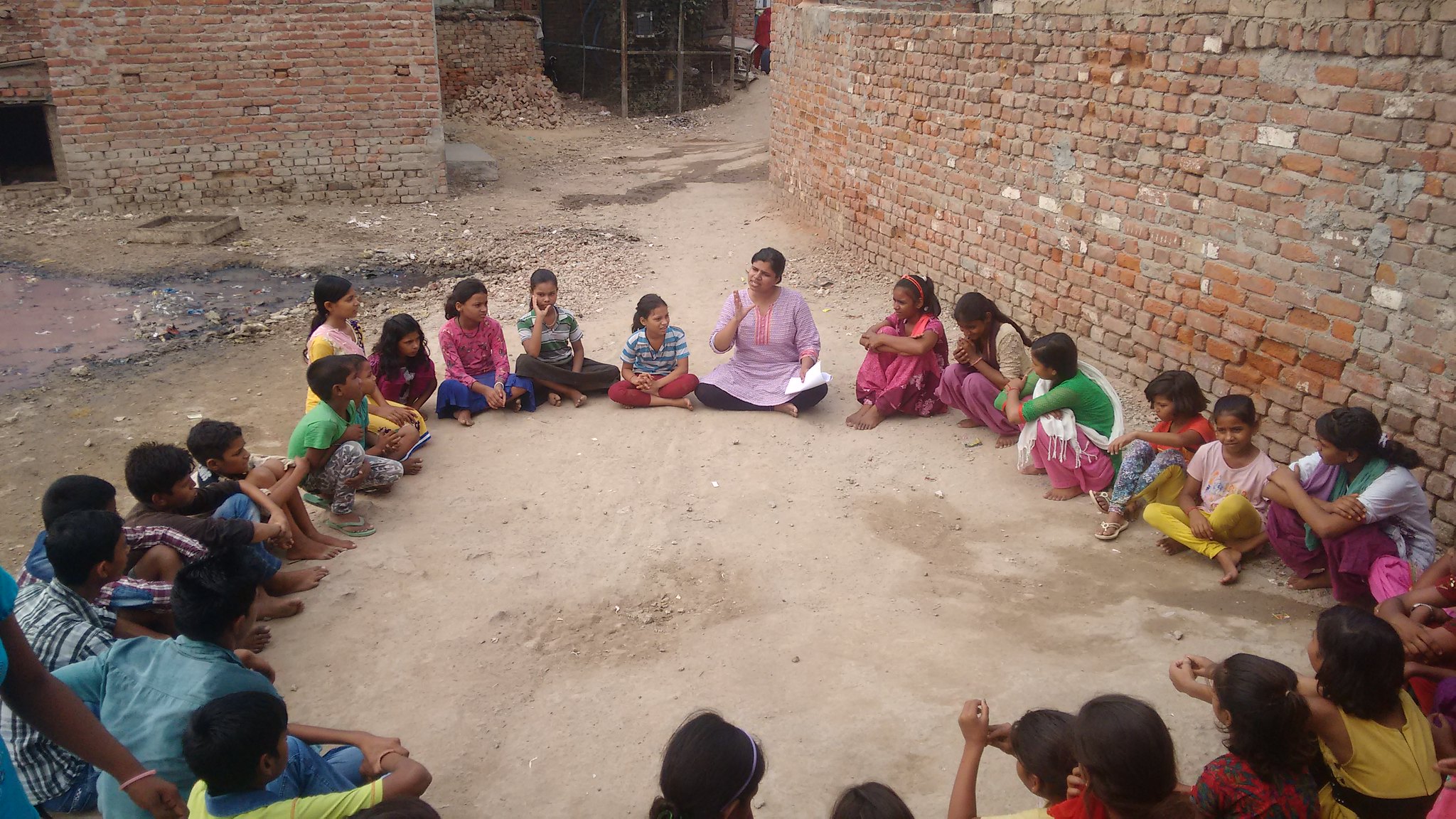
Sahas launched its first gender, sexuality, and reproductive health curriculum in 2016, testing it with a small cohort of adolescents in Delhi-NCR. The early response was striking. Young people who had never been given space to ask questions about their bodies, their safety, or their rights were suddenly asking, and talking, and pushing back against silence.
Sustaining that momentum required funding, and in 2017 The Pollination Project awarded Sahas its first grant. Dr. Yadav describes what that support meant in a moment when no other funding was available:
“The Pollination Project Impact Grant was the only financial support we received to accomplish the work we envisioned for this year. With folded hands and just gratitude in my heart, I wish to thank everyone at the Pollination Project for listening to our vision and providing this unconditional support, thereby keeping our dream for a world free from gender-based violence, alive. This means a lot to me and everyone at Sahas.”
A second grant extended that support further, reaching adolescents and women who had no other access to this kind of education:
“I feel fortunate that I had an opportunity to receive a grant from The Pollination Project. I wish to extend my heartfelt thank you and gratitude for the trust you have showed in my vision and dream. This is the first and only grant I received this year for my work so, it’s all the more special for me. It is because of this grant that I could reach 100+ adolescents and 120+ women through the gender work I had envisioned.”
That early trust gave Sahas the foundation to grow from a single classroom in Delhi-NCR into a multi-state movement.
Building Safe Spaces
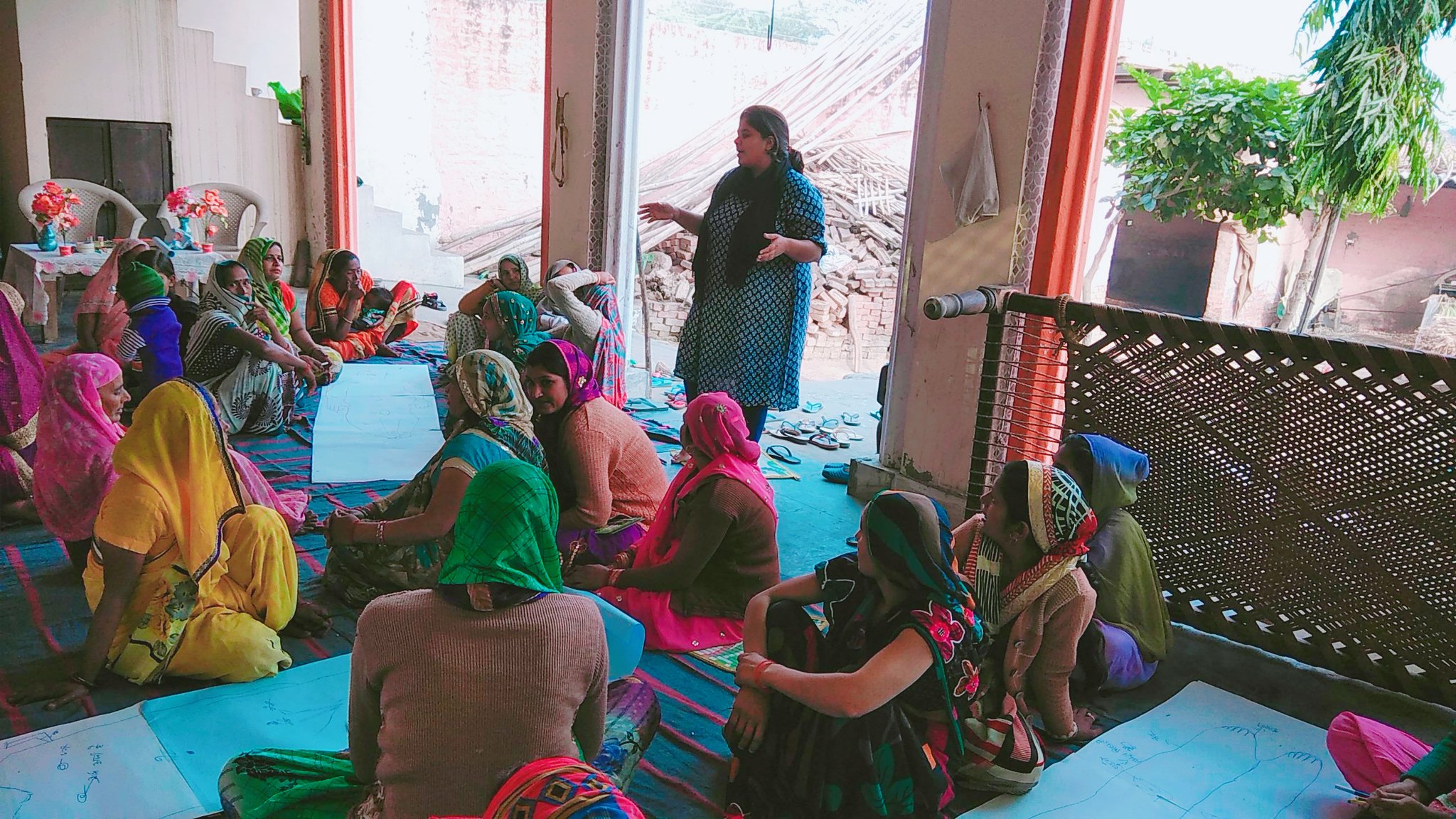
Sahas designed its programming around a simple principle: gender-based violence starts early, and so must the work of preventing it. The organization built partnerships with government schools and district administrations in Delhi-NCR and Baghpat, Uttar Pradesh, training teachers and parents alongside adolescents to create what Sahas calls a gender-sensitive ecosystem.
By 2018 and 2019, that work had expanded into Uttar Pradesh, Haryana, and Jammu, reaching adolescents, teachers, parents, and social workers. The organization’s gender and sexuality curriculum was recognized at the Future of Women conference in Sri Lanka in 2019, where co-founders Mona Yadav and Purvi were named Best Presenters for their work challenging child sexual abuse through adolescent education.
When the pandemic hit in 2020, Sahas adapted its curriculum for online delivery rather than pausing its work. Dr. Yadav, also a trained psychologist, began facilitating mental health workshops as gender-based violence and school dropout rates rose alongside the crisis. That same year, Sahas began its first community-based initiative in a remote village near Aligarh, Uttar Pradesh, where early marriage and rising violence were pushing girls out of school.
Ten Years, 11,079 Lives Reached
The numbers behind a decade of Sahas’s work tell their own story: 6,706 adolescents reached, 2,500 young people engaged, 1,000 women empowered, 225 teachers trained, and 180 police personnel sensitized to gender-based violence. Sahas has partnered with 16 schools and collaborated with 15 partner NGOs across Delhi-NCR, Haryana, Uttar Pradesh, Rajasthan, Madhya Pradesh, Bihar, Jharkhand, Telangana, Jammu and Kashmir, and Ladakh.
The Sahasi Girls Program, supported by She’s the First, centered girls’ rights through mentorship, sexual and reproductive health education, and improved access to schooling. In one village, six girls became the first in their community’s history to appear for and pass board exams. In a school where Sahas runs its Sahasi Leaders Program, students used posters and poetry to challenge period stigma, and started feeding a stray dog and her puppies living on campus, an early spark for what would become Sahas’s Compassion for Animals initiative, launched in September 2024.
A New Chapter in Leadership
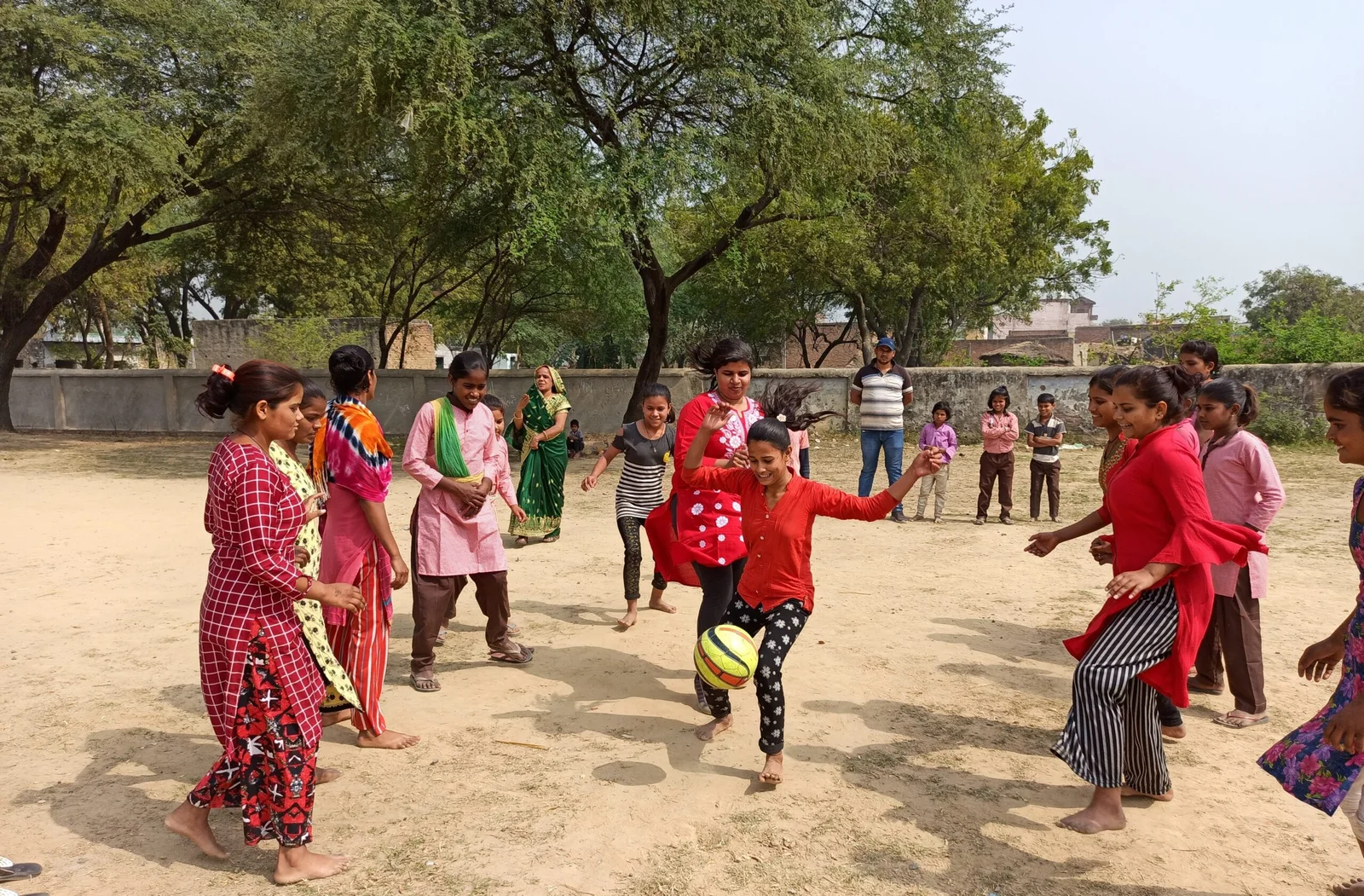
Sahas enters its second decade with the Sahasi Leaders Program, working with schools and colleges to build youth-led movements for gender justice. Dr. Yadav, a Dalai Lama Fellow, describes the organization’s aspiration simply: to keep centering the voices of adolescents and young people so they can challenge injustice and build a world grounded in equality, dignity, and freedom.
What began with a seed grant and a curriculum tested in a Delhi-NCR classroom has grown into a decade-long movement across nine states and union territories. It is a reminder of what a single early yes can grow into, and why The Pollination Project continues to invest in changemakers before anyone else will.
Help More Ideas Take Root
Support more early ideas
Your donation fuels grassroots projects advancing compassion, sustainability, animal welfare, and community-led solutions worldwide.
Have a project like this?
If you’re holding an early idea for change, The Pollination Project is ready to help you bring it to life. Apply for funding!