Location: Ceará, BRAZIL
Eliziane Virgolino Alencar Colares has spent years building bridges between worlds that rarely speak to each other, the world of plant-based nutrition and the communities that need it most. A vegan advocate, journalist, and weekly columnist on veganism for O Povo — the largest print newspaper in the state of Ceará, Brazil — she also hosts a regular segment on Rádio O Povo CBN. She is not simply a communicator. She is someone who understands, with urgency and clarity, that the future of food equity in Brazil depends on making plant-based eating visible, accessible, and desirable in the places where it is least expected.
An Itinerant Vegan Gastronomy School
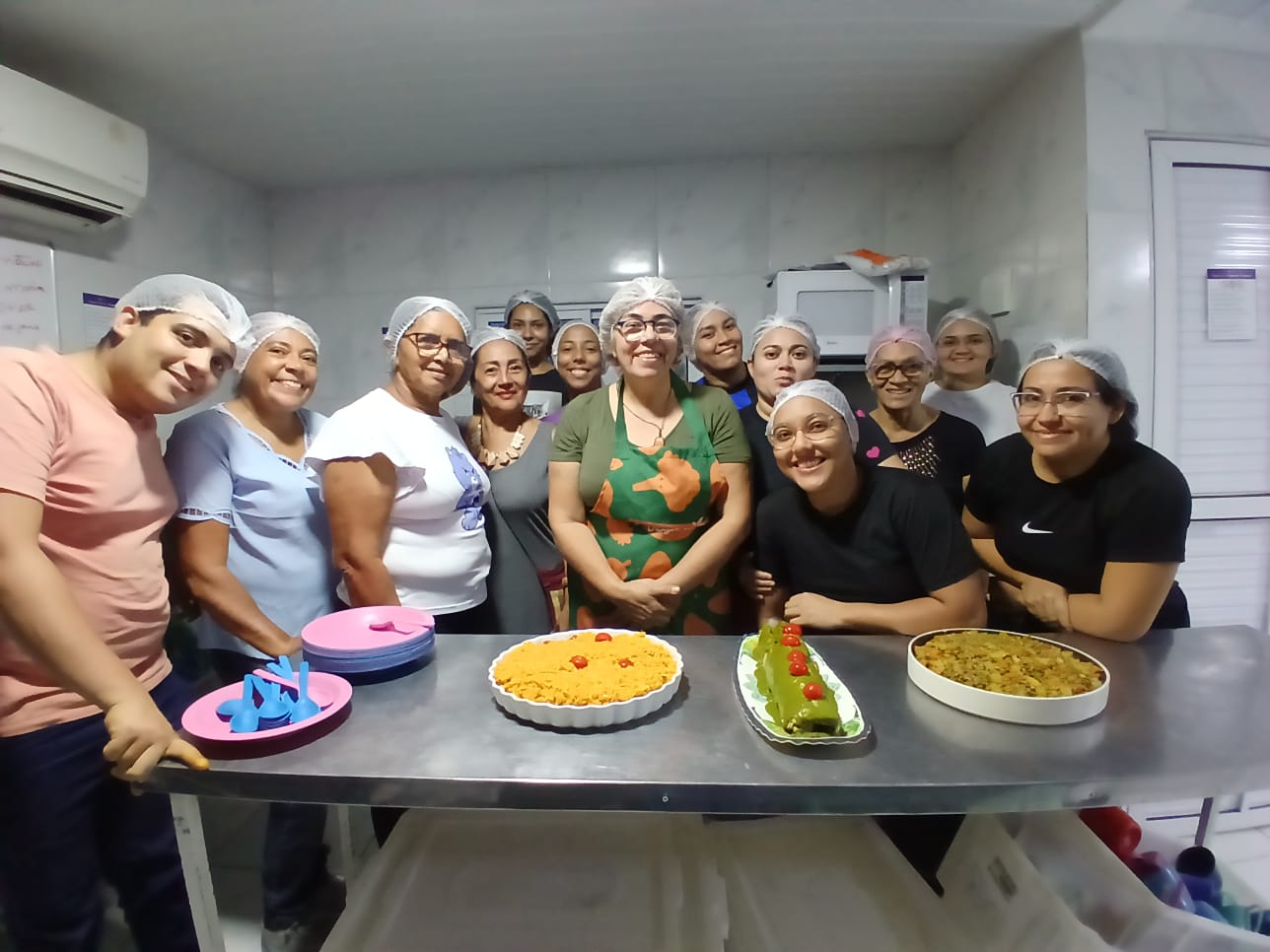
The Escola de Gastronomia Vegana Itinerante (Itinerant Vegan Gastronomy School) is a traveling culinary school designed to train community multipliers in vegan cooking, with a focus on low-income neighborhoods in Fortaleza, the capital of Ceará, in Brazil’s Northeast region.
Plant-based eating faces a deep communication problem in Brazil. For much of the population, terms like “vegan” or “vegetarian” are unfamiliar, and meals without animal products are widely perceived as incomplete, inaccessible, or socially inferior. A deeply rooted cultural narrative ties meat and dairy consumption to health and upward mobility. At the same time, Brazil has re-entered the global hunger map in recent years, with community and solidarity kitchens becoming central to food security for millions. It is precisely in this context — where food insecurity and nutritional misinformation intersect — that Eliziane saw both a gap and an opportunity.
“Plant-based eating has an enormous potential for expansion,” she says, “but it needs to grow its visibility exponentially. Facing the massive media investments of the livestock industry with only volunteer efforts is slow work. But the animals and the planet are in a hurry.”
A seed grant from The Pollination Project made the first step possible.
What the seed grant made possible
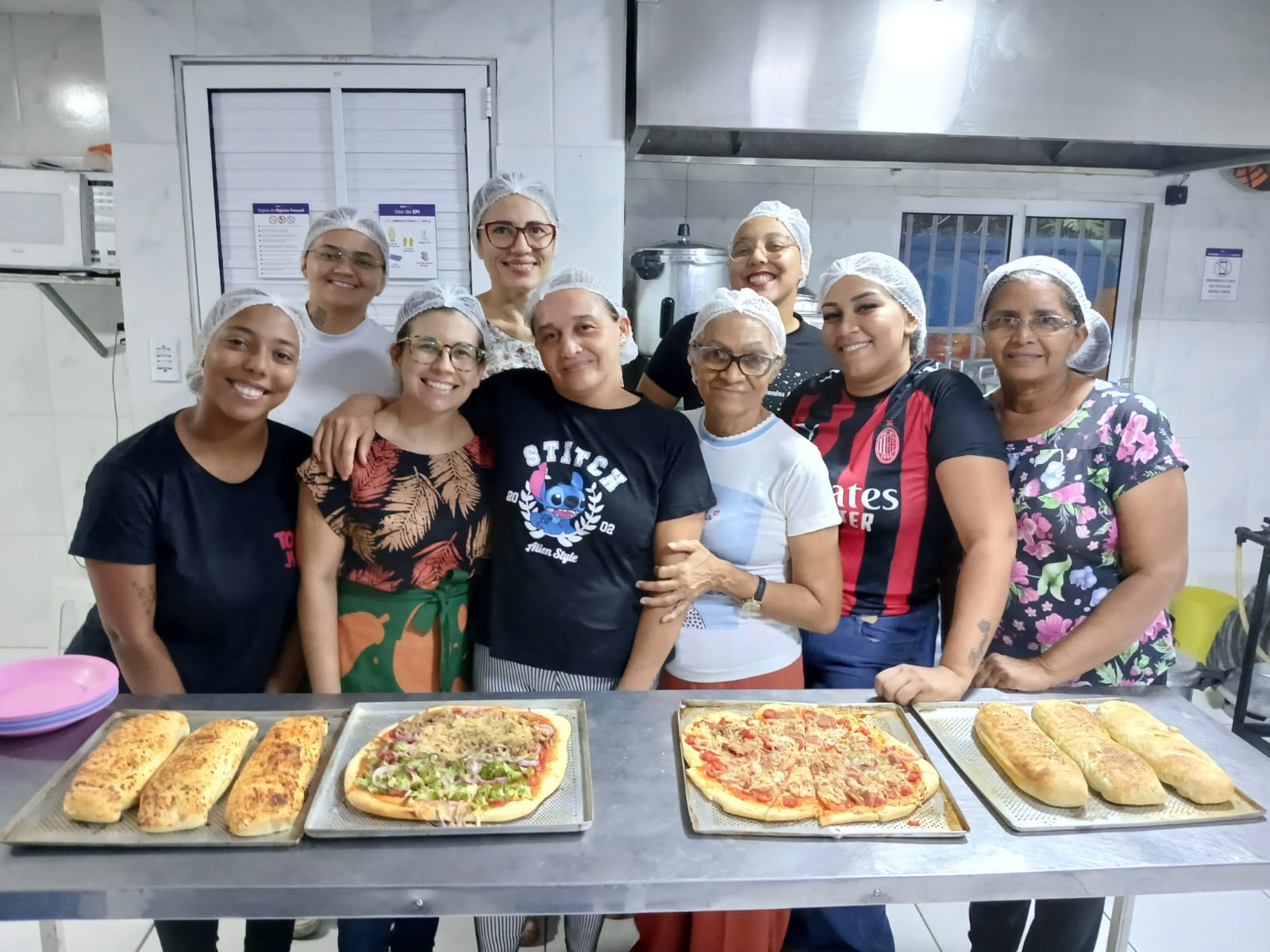
In October 2025, the pilot edition of the Escola de Gastronomia Vegana was held in the Beco CÉU community kitchen, located in the Inferninho favela in the Vila Velha neighborhood — a peripheral community on the outskirts of Fortaleza. Two cohorts were held back-to-back, with 41 participants enrolled, all residents of the community. Of those, 39 were women and 2 were men.
The TPP grant funded a structured four-module curriculum taught by respected local culinary professionals:
- Nutrition and best practices, led by nutritionist Ana Angélica Luz
- Savory meals, led by vegan chef Ana Mota of restaurant Terrana
- Bread and snacks, led by chef Jéssica Sousa of Pimenta Vegana
- Pastry and sweets, led by chef Carol Borges of Borges Baker
Classes took place in the evenings and on Saturday mornings to accommodate both the community kitchen’s daytime operations — which produces meals for the neighborhood’s food-insecure residents — and the participants’ own work schedules.
Each student received a printed workbook containing nutritional information, kitchen best practices, and recipes from each chef. All materials were designed pro bono by the Advance communications agency, keeping costs focused where they mattered most: the chefs, the ingredients, and the students.
“The TPP grant made it viable for locally renowned chefs to participate,” Eliziane notes. “They would not have been able to volunteer their time for a larger-scale course. The grant also covered ingredients, printed workbooks, and logistics. Without this support, we would not have been able to make the project happen.”
The grant covered teacher fees, ingredients, transportation, printed materials, video and photo documentation, uniforms and protective gear, and certificates.
Impact That Reaches Beyond the Classroom
Despite logistical challenges — a small, hot kitchen without seating, evening-only scheduling, and limited space for hands-on practice — the results were meaningful. In the first cohort, 41% of enrolled participants attended every single class. In the second, that figure rose to 55.5%. Several graduates went on to enroll in the Escola de Gastronomia Social of the State Government of Ceará — with the same chefs from the pilot now teaching there, a direct ripple effect of the project.
The project directly impacted 30 participants through the two cohorts, and an estimated 90 people when accounting for the nutritional knowledge each participant carried home to family and community members. Based on PETA’s estimate that one vegan saves approximately 200 animals per year, and projecting that at least half of participants reduce their animal product consumption by half, the project is estimated to have contributed to sparing the lives of 1,500 animals within one year.
“Among the regular attendees, we saw real interest in entrepreneurship, openness to veganism, and genuine sensitivity to animal welfare,” Eliziane reflects. “We registered their contacts to follow their journeys.”
The participants’ motivations were as practical as they were ethical. Many were looking for recipes appropriate for family members with lactose intolerance or diabetes — underlining that plant-based cooking, when framed accessibly, speaks to everyday health needs in low-income communities, not just to ideological conviction.
Over 250 volunteer hours were contributed to the project. Media coverage reached audiences through Eliziane’s newspaper column and radio program. And the course generated zero income — every resource went directly to the community.
A Living Laboratory for What Comes Next
The pilot was honest about its imperfections. The borrowed kitchen came with restrictions on scheduling and enrollment autonomy. The space was warm and cramped. Dropout rates, driven by fatigue and distance, remained a challenge. But Eliziane and her team approached every obstacle as data.
From those learnings, a clear strategic roadmap has emerged: expanding the pool of chefs and nutritionists, designing shorter and more focused courses, building formal partnerships with state secretariats for animal protection, health, and education, recording short video lessons for social media distribution, and ultimately formalizing the school as an NGO with sustainable funding streams.
“TPP was fundamental for this first step,” Eliziane says. “Important, effective — but slow compared to the scale of the challenge. Still, every person who leaves one of our classes knowing how to make a delicious, affordable, animal-free meal carries that knowledge forward forever.”
The Escola de Gastronomia Vegana Itinerante is not a finished project. It is a proof of concept — that plant-based gastronomy education can take root in the places where food insecurity is most acute, that community women can become culinary multipliers, and that a seed grant, carefully spent, can set in motion something far larger than its original size.
Help More Ideas Take Root
Support more early ideas
Your donation fuels grassroots projects advancing compassion, sustainability, animal welfare, and community-led solutions worldwide.
Have a project like this?
If you’re holding an early idea for change, The Pollination Project is ready to help you bring it to life. Apply for funding!