Location: Dar es salaam, TANZANIA
Nazir Atul builds change with paint, questions, and the steady belief that young people can lead their communities toward dignity. Trained in economics and shaped by years of grassroots work, he founded Visual Aided Stories (VAS) as a youth-led organization where mural art becomes a pathway to leadership, career development, and income.
“I’ve seen the transformative power of creativity firsthand—how it builds confidence, generates income, and turns overlooked youth into leaders,” he says.
That conviction sits at the center of Murals for Medical Access, a pilot project supported by a seed grant from The Pollination Project.
For Nazir, art is a public language. And in communities where information can be limited by barriers like literacy, distance, and stigma, a mural can carry what flyers and speeches often can’t: an invitation to talk, to learn, and to act.
A seed grant that turned an idea into a community platform
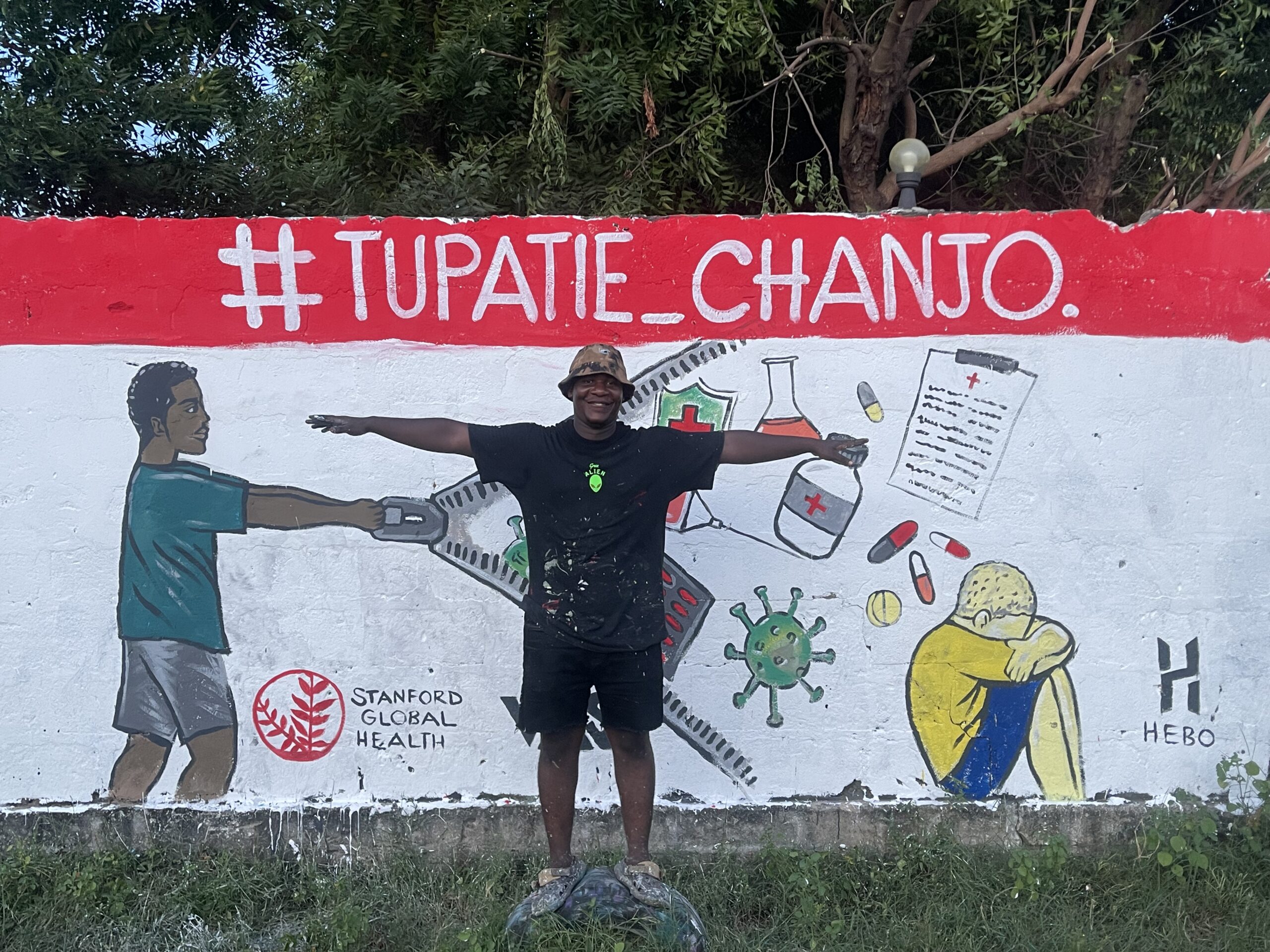
TPP’s grant arrived at a critical moment: when Murals for Medical Access was still a young idea, full of urgency and risk. With TPP’s early-stage funding, VAS was able to implement a community-led pilot focused on the medical access challenges faced by people with albinism, while also creating opportunities for local youth to build skills, confidence, and ownership through participatory public art.
The project began with listening. VAS convened facilitated brainstorming sessions where community members, youth, and people with albinism could speak openly about stigma, barriers to healthcare, and the daily realities of navigating limited services and environmental exposure. Those conversations shaped the mural’s message, imagery, and purpose.
Then the work moved into the open. Local youth designed and painted a large public mural, created not as a stand-alone artwork, but as a lasting advocacy tool that continues to spark dialogue about health rights, inclusion, and dignity. In a place where information must travel fast and be understood at a glance, the mural became a public reminder: people with albinism deserve safe, respectful, accessible healthcare and the community can be part of making that real.
What the seed grant made possible
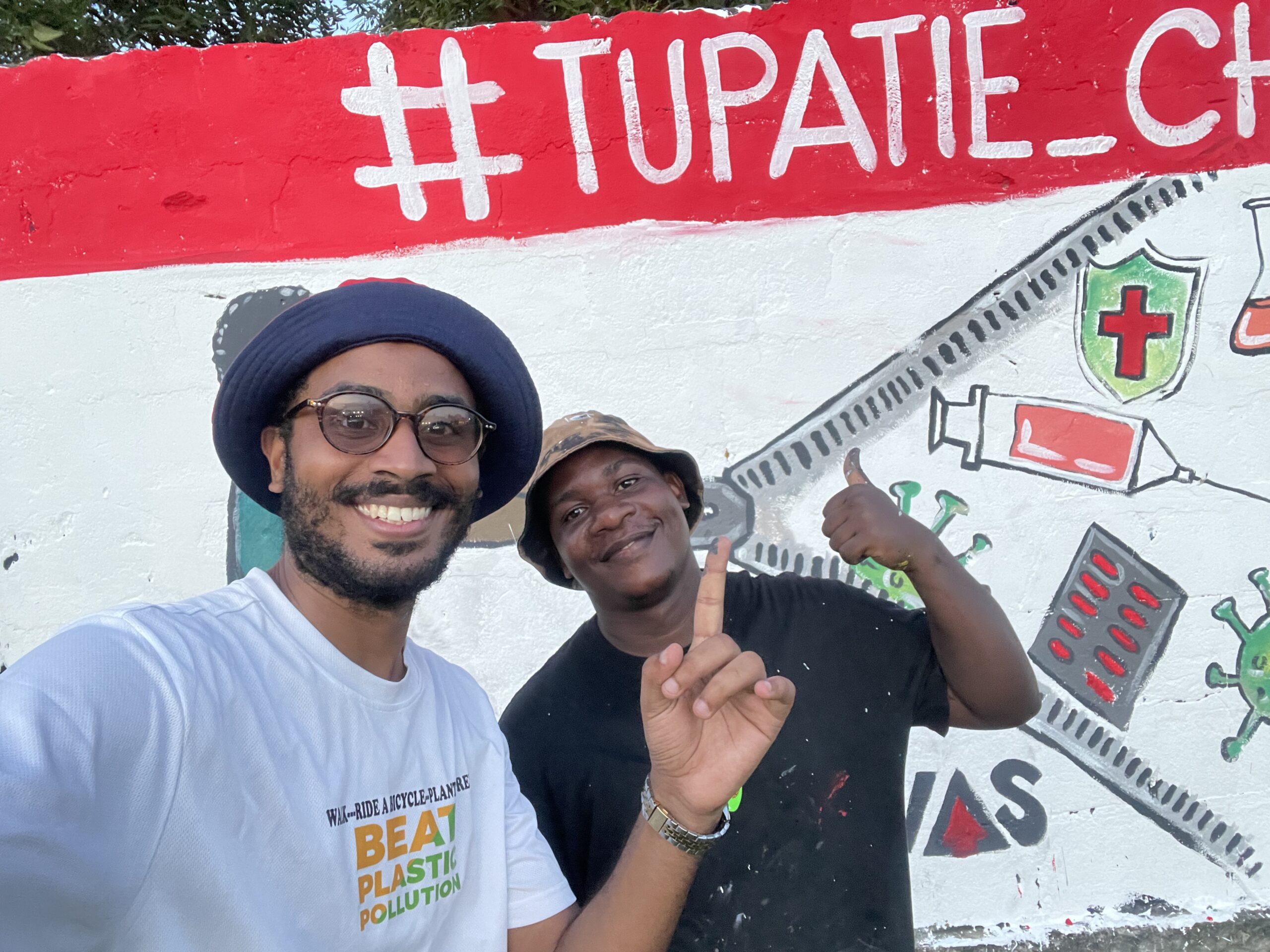
TPP’s support translated into practical, on-the-ground capacity: art supplies to produce a durable mural; sketch materials to develop concepts collaboratively; hall rental for multiple community sessions; and equipment to document the work and amplify community voice.
It also helped VAS respond to the realities of implementing in a remote setting, where travel is difficult, materials can be hard to source locally, and each step requires patience and community alignment.
“The grant did more than support a mural—it enabled us to enter a remote and underserved community, listen deeply, and validate experiences that are often overlooked,” Nazir reflected afterward.
That flexibility mattered. During implementation, extreme heat affected who could safely participate outdoors, especially people with albinism, for whom prolonged sun exposure carries real health risks. Even with those constraints, VAS was able to run a concept alignment session and complete the installation with the participants available, ensuring local ownership of the message stayed intact.
A seed grant is often described as “small,” but what it activates can be substantial, especially when it supports grassroots leaders already trusted by their communities. Through this pilot, VAS directly reached 178 people, including community members who received supplies, health education, counseling, and youth capacity-building support. The project also recorded 80 volunteer hours contributed toward making the work possible.
Why mural art matters for health equity and social inclusion
Health equity work often depends on communication—clear, consistent, culturally relevant communication. Murals can do that work in public, every day, without requiring a formal classroom, a smartphone, or a specialized vocabulary. They make complex issues visible, they normalize discussion, and they invite people to stand together long enough to ask: What needs to change? Who is being left out? What can we do next?
Nazir has spent years building the VAS model, training more than 1,000 marginalized youth through career development, leadership, and entrepreneurship, while creating platforms for young artists to earn income through their craft. That experience, paired with the credibility he has gained as a recognized changemaker and youth storyteller, made him ready to lead a project where art carries both economic opportunity and social purpose.
And TPP’s grant strengthened what early-stage philanthropy is uniquely positioned to do: back a local leader with a clear vision, then trust them to adapt, learn, and build something the community can carry forward.
“The flexibility and trust embedded in TPP’s model allowed us to adapt in real time to on-the-ground realities,” Nazir shared, noting how essential that was amid logistical and social complexities.
What comes next
The pilot laid a foundation for growth. VAS plans to expand the initiative into a structured, multi-phase program, adding more community engagement sessions, developing additional murals on priority health and social issues, and strengthening partnerships with healthcare providers and institutions to integrate education and basic screenings alongside art interventions.
This is how early funding multiplies: it proves a concept, builds local momentum, and generates the evidence needed to invite broader collaboration. It also protects what matters most—community voice—by ensuring solutions are shaped by the people living the reality.
For philanthropists and donors looking for high-leverage impact, Murals for Medical Access offers a clear example: a seed grant can move quickly, reach people directly, and create a lasting public resource that continues to educate and advocate long after the paint dries.
We are deeply grateful to The Pollination Project for believing in this idea at its pilot stage. The grant enabled us to enter a remote and underserved community, listen deeply, and validate experiences that are often overlooked. The flexibility and trust embedded in TPP’s model allowed us to adapt in real time to on-the-ground realities, which was essential given the logistical and social complexities we encountered.
Help More Ideas Take Root
Support more early ideas
Your donation fuels grassroots projects advancing compassion, sustainability, animal welfare, and community-led solutions worldwide.
Have a project like this?
If you’re holding an early idea for change, The Pollination Project is ready to help you bring it to life. Apply for funding!