Location: INDONESIA
Habibi Ramadhan believes every child deserves the chance to be seen for what they can create. A student with disabilities at Universitas Lancang Kuning and an active volunteer with Dompet Dhuafa and other community groups in Riau, Habibi has watched too many children with special needs go through school without many opportunities to show their talents. His response was simple and bold: put high-quality art materials directly into their hands, invite them to experiment freely, and make sure they leave with something real they can hold onto.
“Art can bring joy, confidence, and self-expression to children with special needs who rarely have the opportunity to showcase their talents,” Habibi shared about his vision for a tote bag painting workshop, designed as a safe, fun, creative space where each child could explore ideas, collaborate, and take home their own artwork as a proud keepsake.
That vision became a full-scale inclusive art workshop because The Pollination Project’s seed grant backed it at the moment it mattered most.
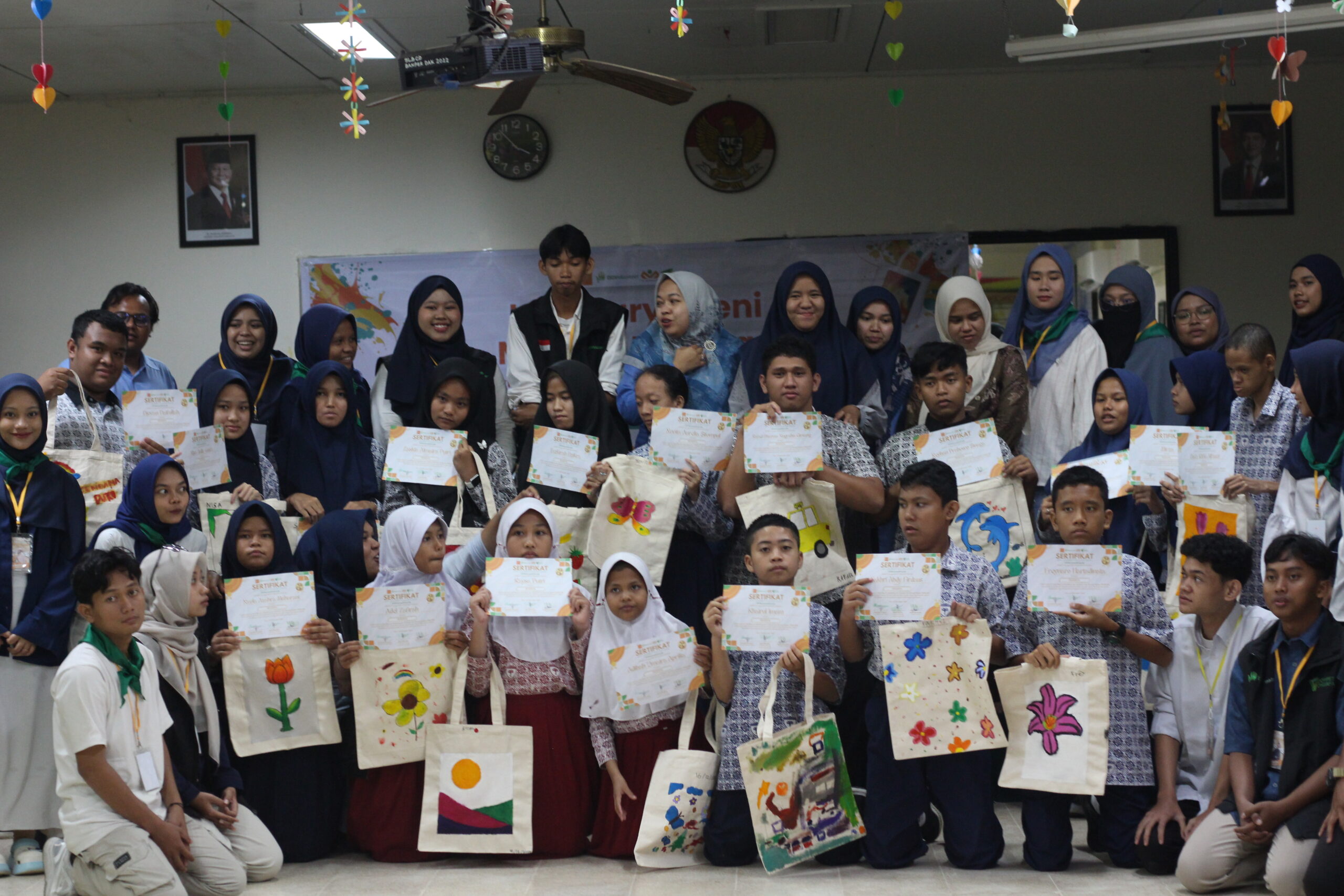
With support from The Pollination Project, Habibi led Tote Bag Art Workshop with Special Needs (TBAW-SN), an inclusive arts initiative that brought creative expression and artistic therapy to students with disabilities at SLB Cendana Duri. The project took place in Duri, Bengkalis Regency, in Indonesia’s Riau Province, grounded in local community relationships and strengthened by a global vote of confidence in grassroots leadership.
A full day of creativity, shaped for accessibility
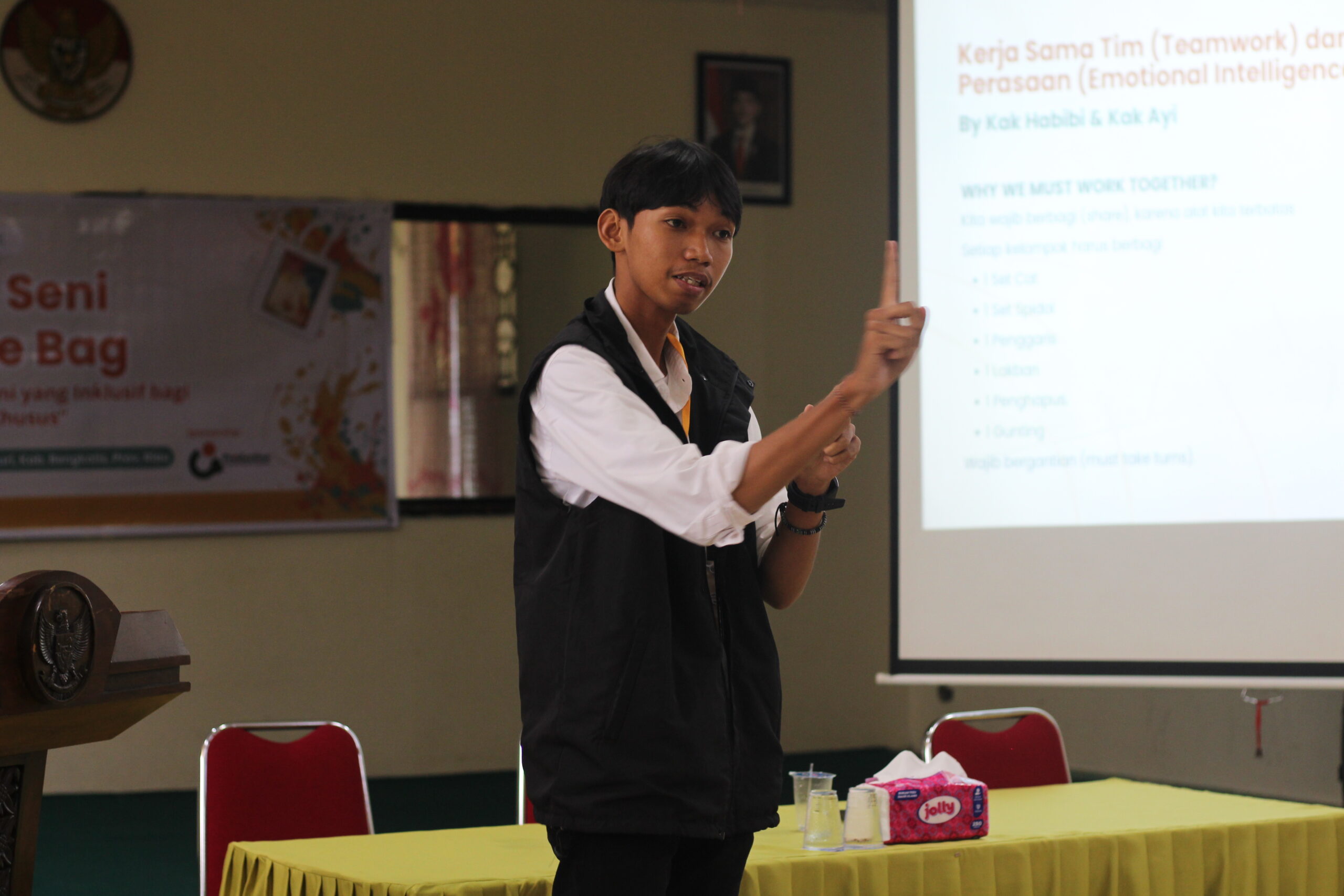
At SLB Cendana Duri, the workshop unfolded as a 10-hour creative experience, starting with early preparation at 6:30 a.m. and ending with an appreciation session in the afternoon. Students designed and painted their own tote bags, supported closely by a trained team of volunteers who used visual and gestural communication to keep the space accessible and encouraging.
Habibi didn’t treat accessibility as an add-on. The volunteer team – 19 people from Dompet Dhuafa Volunteer Riau – was mobilized and trained to communicate inclusively, helping bridge gaps between hearing volunteers and Deaf/special needs communities. The workshop became a practical lesson in disability inclusion: a place where students could focus on color, texture, and imagination, without being rushed, underestimated, or left out.
What the seed grant made possible
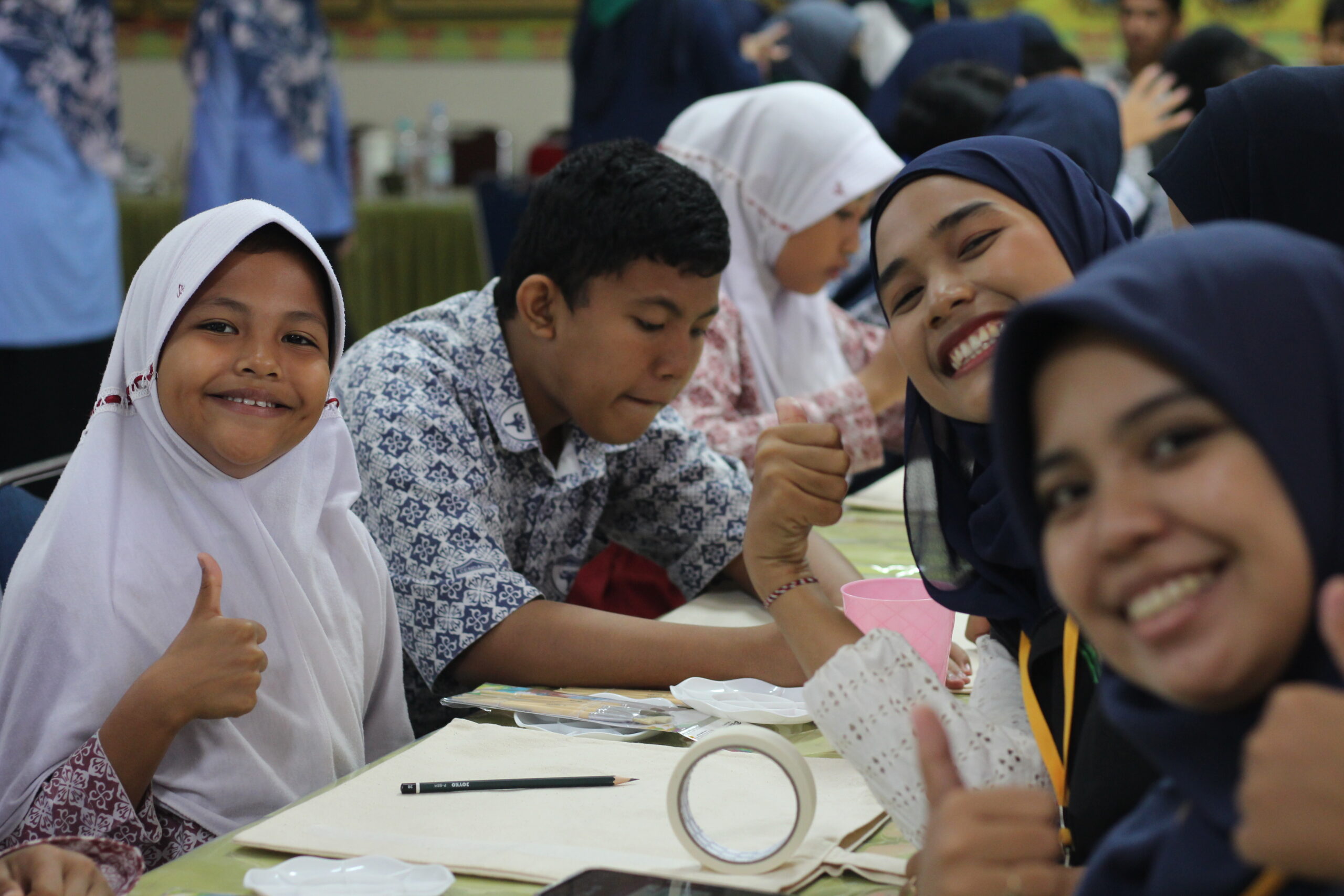
A seed grant is small by design, but when it’s targeted and timely, it can unlock an entire experience. In this case, The Pollination Project’s support ensured students didn’t have to “make do” with limited supplies. The grant covered 20 plain canvas tote bags, acrylic paint, brushes, markers, palettes, and other essential workshop materials, plus printing for certificates and volunteer ID cards.
It also addressed a barrier that often decides whether inclusion happens at all: transportation. When volunteer interest surged beyond expectations (from 8 people to 19) Habibi faced a logistical and safety challenge for the 260 km round trip. He reallocated savings to rent a full-sized bus (IDR 1,700,000 / about $107.60) to protect the group’s safety and cohesion.
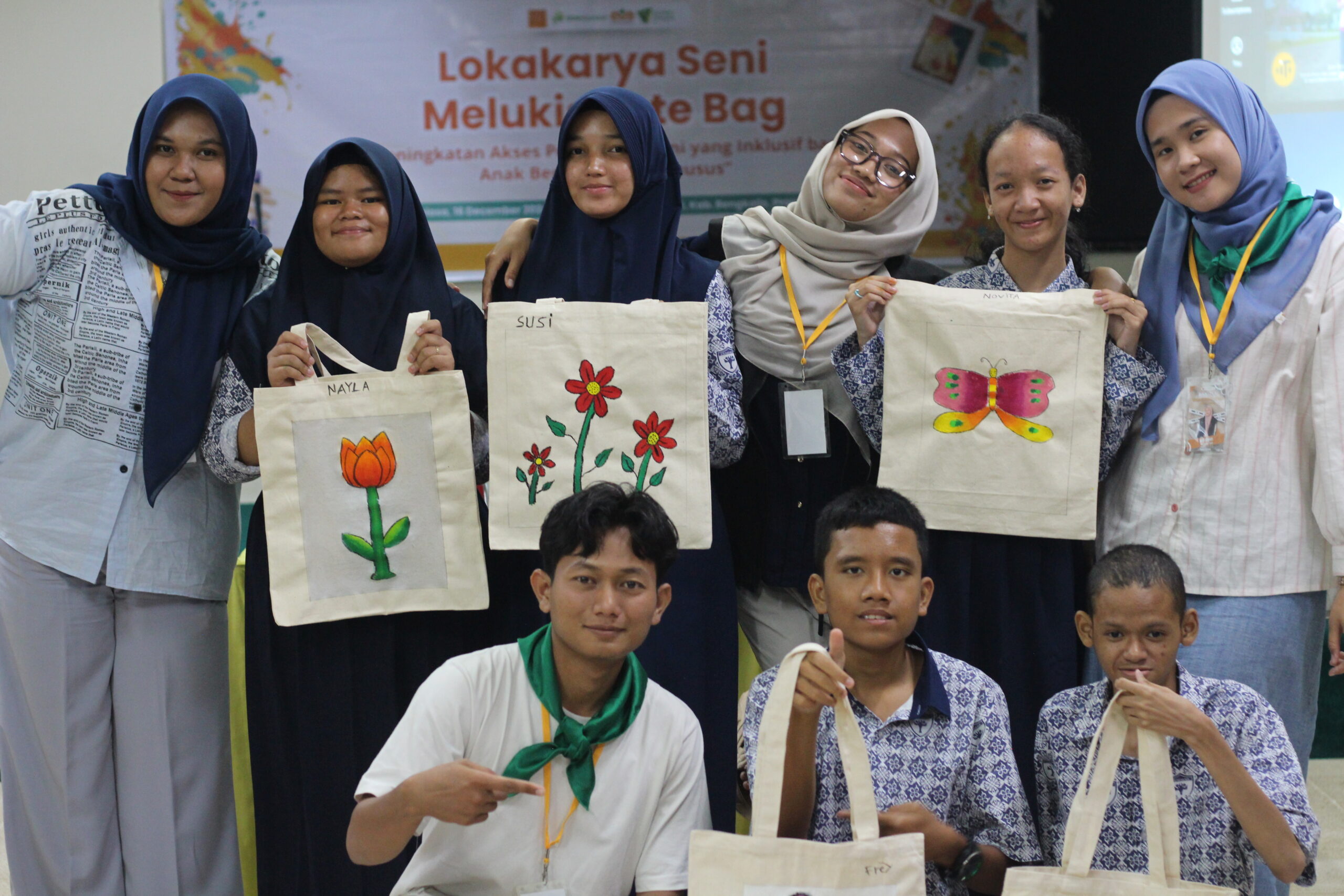
The grant’s flexibility made it possible to respond in real time, so the workshop could happen with the right support around the students, not with preventable risks. That $251.48 seed grant powered the full workshop – supplies, transportation, recognition items for students, and basic nourishment and water for participants – resulting in clear, trackable outcomes: 20 students with special needs completed their own custom-painted tote bags, 19 volunteers were mobilized and trained in inclusive communication, and 39 people were directly impacted overall.
Beyond attendance, the project generated deep community effort, with 190 volunteer hours contributed to deliver the day. And the most telling measure of all: every student participated, with a 100% engagement rate, each child actively creating and taking home a finished piece of art they made themselves.
Deaf leadership on full display
The initiative also carried an impact that can’t be separated from the project’s design: it was led by a Deaf project leader, from planning to execution.
Habibi describes the workshop as a platform for Deaf leadership, proof that a disability does not limit someone’s ability to lead high-impact, global-standard work.
“This experience with The Pollination Project has been life-changing for me as a Deaf leader in Indonesia,” Habibi wrote. “It has given me the platform to prove that leadership and social impact are defined by vision, not by ability.”
He also named what seed funding often communicates, beyond dollars: trust. “The support from TPP was… a symbol of trust in my capacity to create change.”
That’s the ripple effect of grassroots philanthropy done well. A small grant signals belief, strengthens local momentum, and helps a leader expand what’s possible, especially in communities where disability inclusion is too often treated as optional.
This experience with The Pollination Project has been life-changing for me as a Deaf leader in Indonesia. It has given me the platform to prove that leadership and social impact are defined by vision, not by ability.
Help More Ideas Take Root
Support more early ideas
Your donation fuels grassroots projects advancing compassion, sustainability, animal welfare, and community-led solutions worldwide.
Have a project like this?
If you’re holding an early idea for change, The Pollination Project is ready to help you bring it to life. Apply for funding!