Our Theory Of Change
Why We Exist
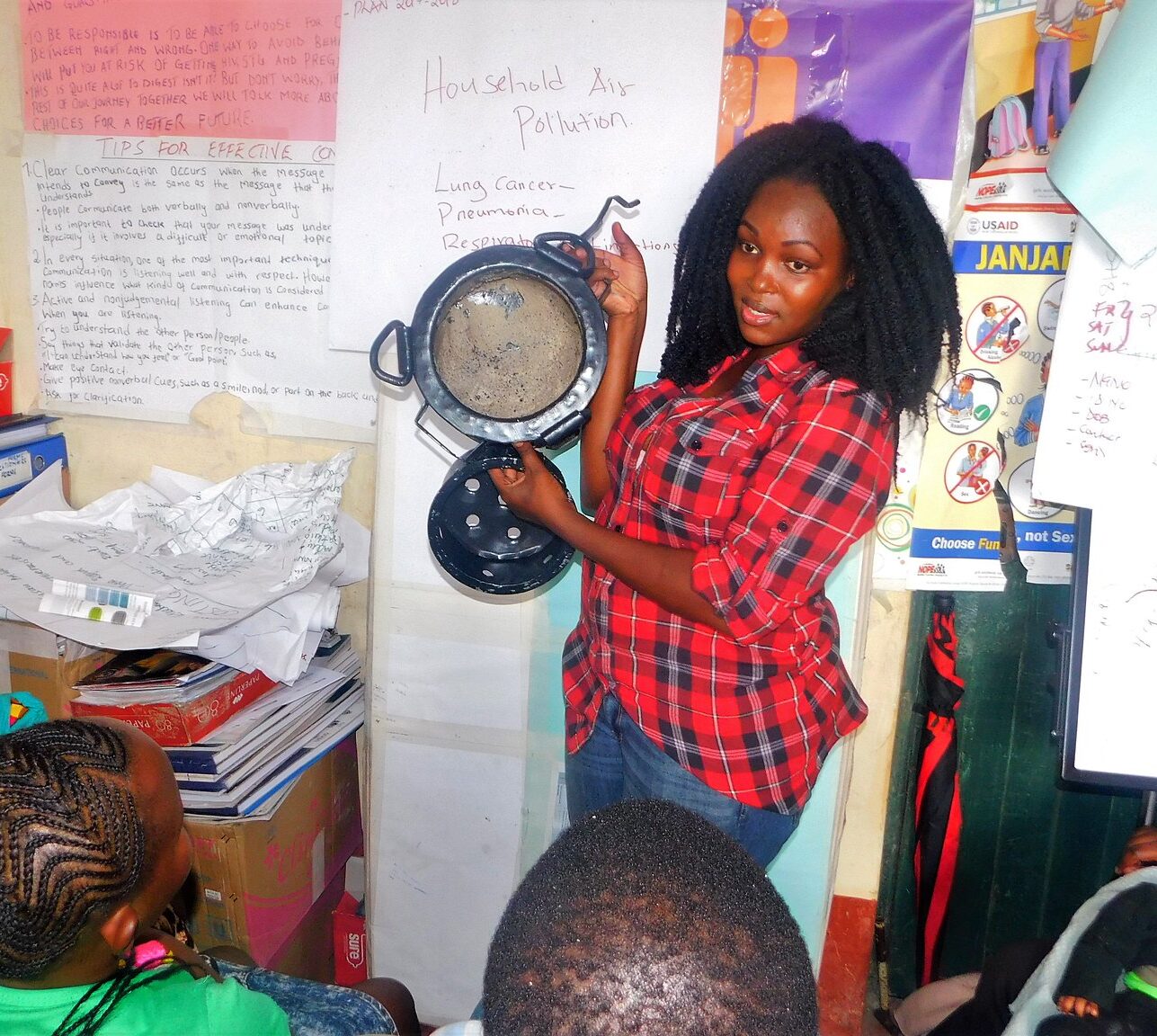
Around the world, there are people who don’t need to be convinced to solve challenges in their own communities. They already see the suffering — of children, of animals, of their fellow humans, of the planet — and they want to do something about it. A teacher in Nigeria will run free vision screenings to give glasses to needy kids because he knows that children who can’t see the board are quietly falling behind. A sanctuary volunteer in Ukraine, given just enough to mount a rescue, will race to the front lines to evacuate animals abandoned in the crossfire of war. A young mother in Nairobi will train other mothers to build and sell clean-burning cookstoves from recycled metal — because she knows that clearing the smoke from their homes can also open the door to a business, an income, and an economic future of their own.
We call these leaders heartivists — people whose drive to effectuate meaningful change comes not from anger or outrage, but from a deep, abiding love: for their communities, for their kids, for the planet, for animals, for what’s possible.
These leaders don’t need to be activated. They need to be resourced.
That is where The Pollination Project shows up — we are an early yes — often the first — for new work just getting off the ground: the first library at a school in Uganda, the first seeds in a community garden in Atlanta, a new bathroom at an orphanage in Ukraine, the first camera in the hands of an undercover investigator at a Polish slaughter plant. We resource beginnings. And the number of leaders ready to begin is only growing.

The Problem
A Structural Mismatch in Philanthropy
The philanthropic system is not designed for the world’s most willing and able changemakers. Foundations fund organizations that can absorb five- and six-figure grants — organizations with staff, boards, audited financials, and development capacity. But the deepest roots of tangible change are held by people operating outside those structures: local leaders, grassroots advocates, expert volunteers, on the ground healthcare providers, teachers, etc. These are skilled, trusted, experienced community members who are willing to do the work as volunteers. But they need $500 for solar lamps to extend study hours in off-grid villages, or car repairs to get a domestic violence survivor safely to work, or insulin for diabetic refugees, or fabric and sewing machines to upskill vulnerable mothers. For these leaders, a small grant isn’t nice-to-have — it’s the difference between being able to take action or not.
This isn’t a minor inefficiency. It is a structural failure — one that often leaves the most trusted, most embedded agents of change without the resources communities need to take care of themselves.
Each year, The Pollination Project receives thousands of applications from willing volunteers across more than 120 countries. We can fund only a fraction of them. That means the majority of changemakers who apply — people who are ready, skilled, and deeply embedded in their communities — get rejected.
Meanwhile, the problems these leaders are trying to solve — animal cruelty, food insecurity, environmental degradation, gender-based violence, illiteracy, etc. continue on.

The Insight
The Highest-Leverage Gap in Philanthropy
At the heart of TPP’s model is a simple but powerful insight:
An expert volunteer +
a small amount of catalytic capital
= outsized, compounding impact.
Our grantees are uniquely knowledgeable people, best positioned to address the needs they live closest to — the teacher who knows which kids are falling behind, the sanctuary volunteer who knows the back roads, the mother who knows what her neighbors actually need. Their expertise is rooted in lived experience and community trust: the kind credentials cannot confer.
For these leaders, the funds are not incidental — they are the missing piece. But the capital does more than cover costs. When TPP invests in a grassroots leader, we are investing in a person: in their knowledge, their vision, their compassion and their standing in their community. That investment signals institutional belief, unlocks credibility with other funders and partners, and opens doors to networks that would otherwise remain closed.
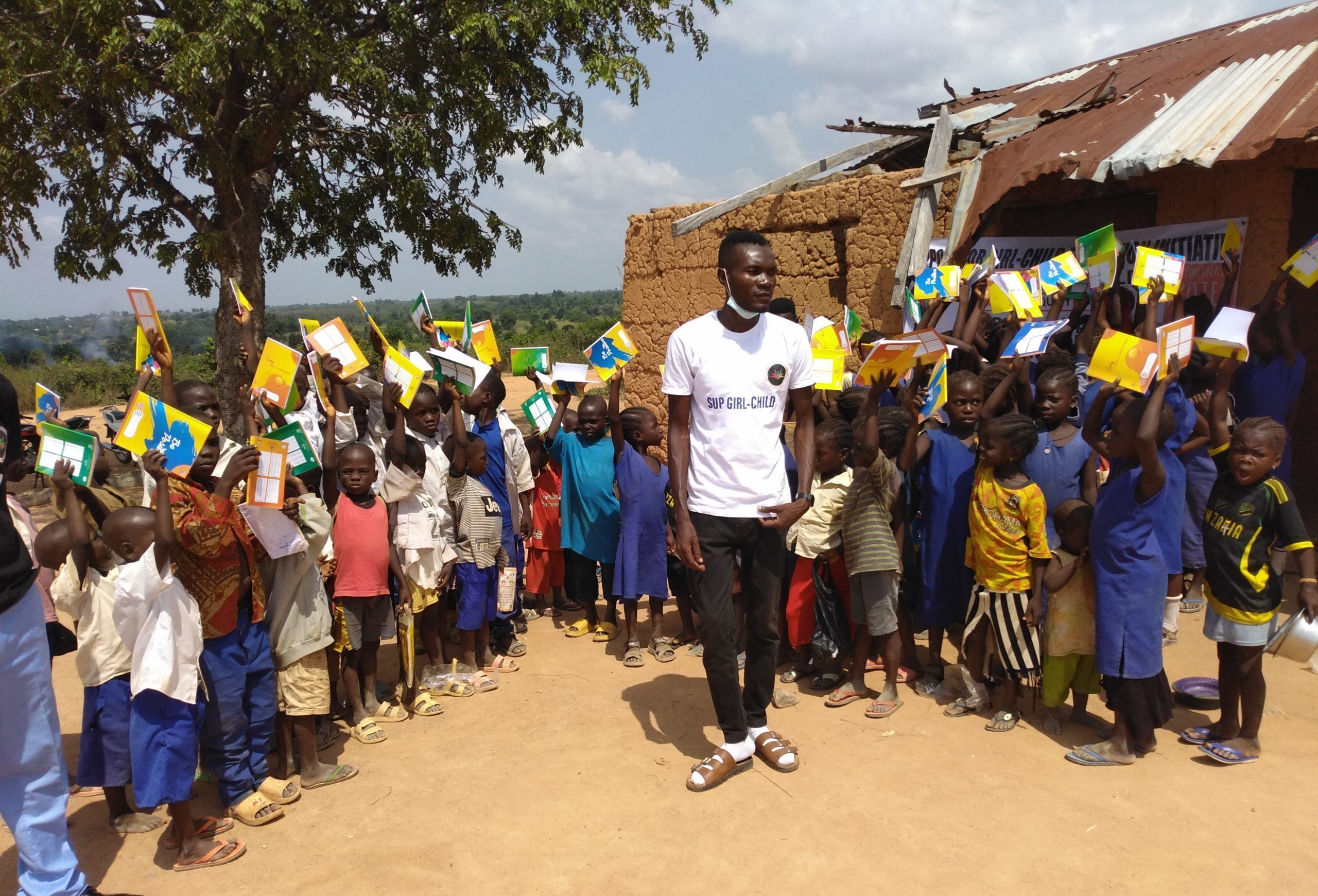
“[The grant] gives us visibility and confidence, it opens the door for other donors to listen and support us”
Emmanuel Nuvalga, 2022 grantee.
Where it helps, we extend the grant with light-touch capacity support — connections, conversations, peer networks — to lengthen what the funds alone can do.
And the labor regularly multiplies. A single $500 grant routinely sets in motion 200+ hours of volunteer service, not only from our grantee but her community at large.
A small grant — for materials, for travel, for tools — unleashes the full force of everything a leader already brings. The leader, seen and supported, can finally execute on what they knew was possible. And something else happens too: each completed project builds confidence, capability, and standing. The volunteer who lands a first grant often becomes the trusted convener their community turns to next. Many grantees grow organizations, train others, and return to TPP as Grant Advisors themselves. The work flourishes — and so do the people doing it.
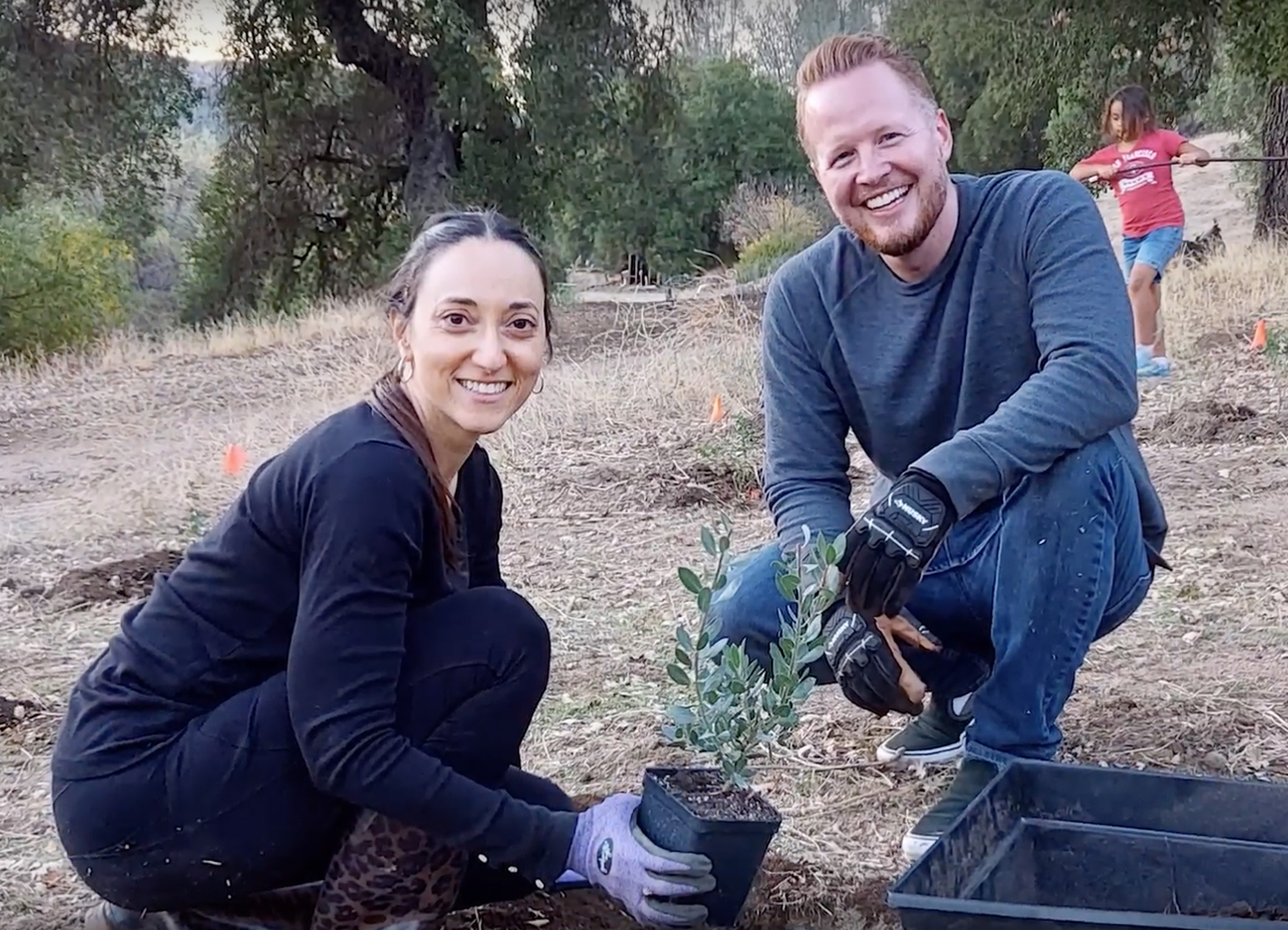
Guillermo Moreno didn’t need to be taught about slaughterhouse conditions in Spain — he was already an expert advocate. A seed grant put a camera in his hands; he did the rest. The footage he captured became part of a campaign that eventually helped pass legislation requiring cameras in every Spanish slaughterhouse.
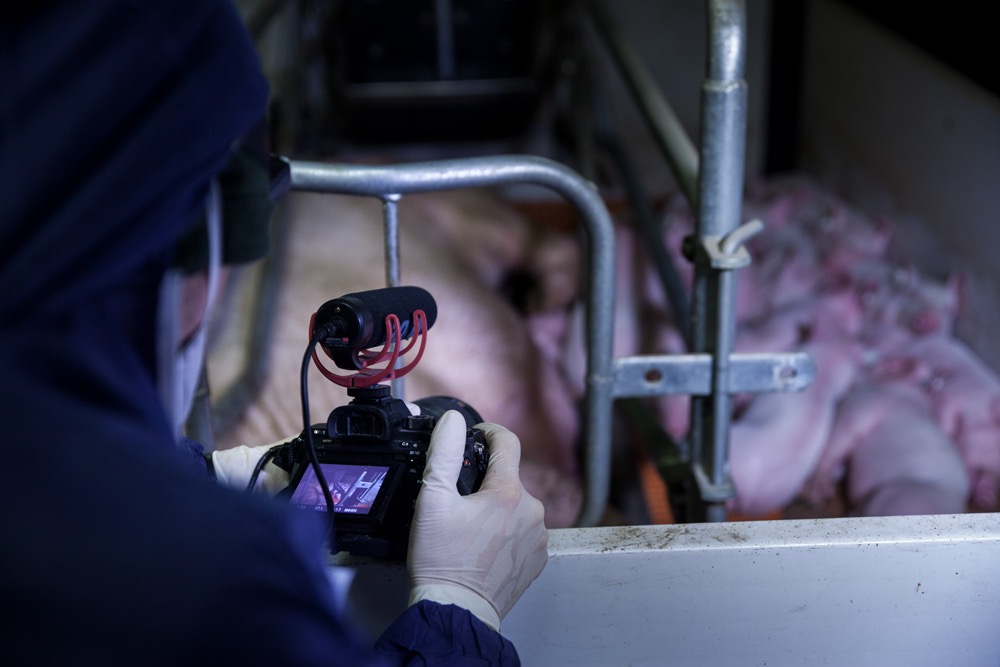
Dorcas Apoore didn’t need to be convinced that women in rural Ghana deserved economic agency — she was already organizing them. A seed grant legitimized her work and helped her access new partnerships. The result — 15 women under a tree grew into a global organization — 429 employees, 15,000 volunteers, 5,500 community projects funded, and a presence in 15 countries.
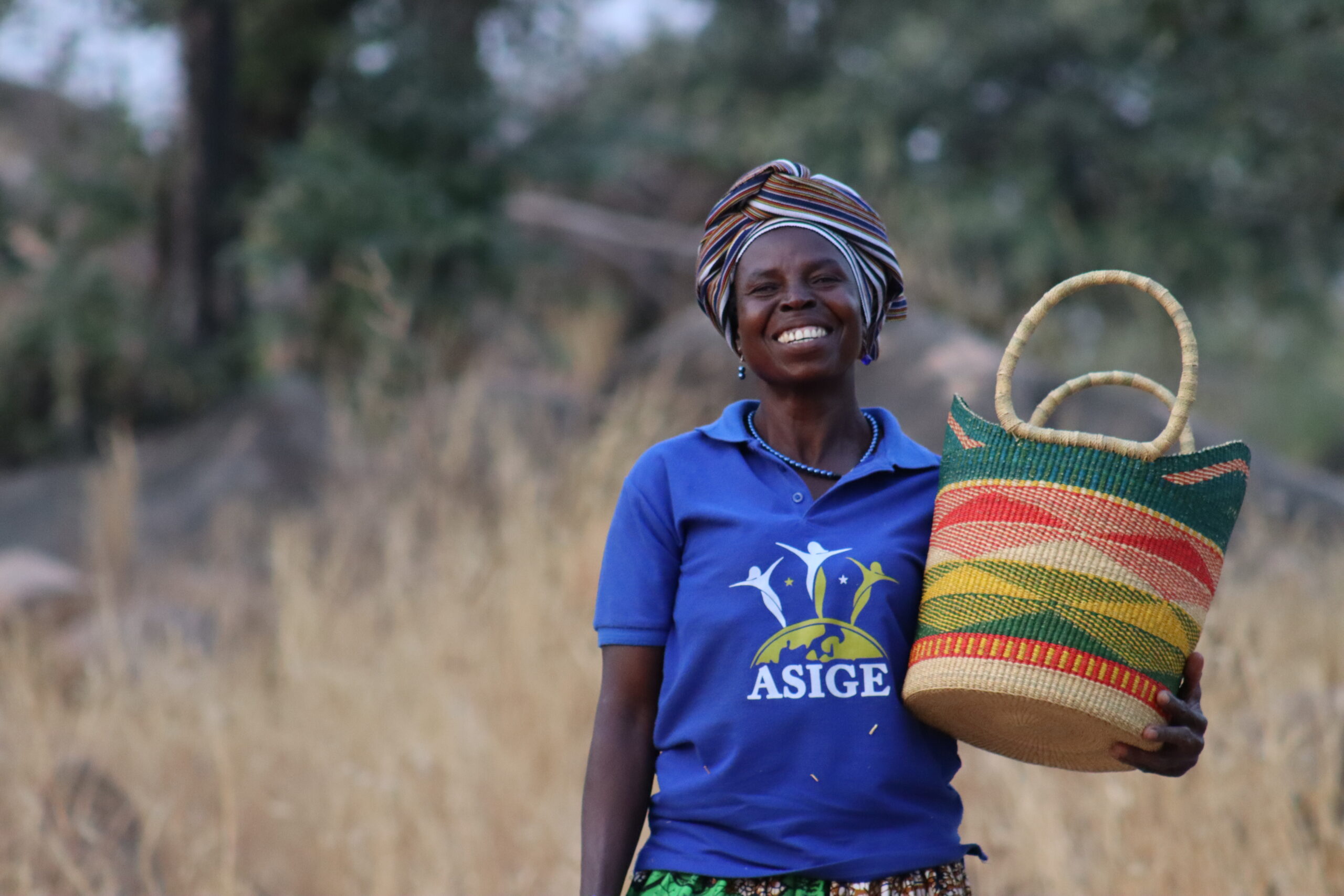
AnnaLise Hoopes already had the curriculum and the vision for teaching young people to tackle social justice challenges through design thinking. A seed grant covered the website, flyers, and events that launched her first cohort; she built everything else. The program has since reached nearly 2,000 young people in 30+ countries, empowering them to design solutions to the world’s most pressing problems.
The grant is not the magic. The person is. The grant is what says: someone sees what you see. Someone believes this is real. Go.
Pathway 1: The Daily Grant Program
The mechanism
TPP accepts applications from grassroots leaders worldwide across all issue areas. Applications are reviewed through a participatory grantmaking process — today 86 volunteer Grant Advisors, over 90% of them are former grantees themselves, bring issue-area expertise and local knowledge to every funding decision.
What happens next
The multiplier
The leverage compounds across the portfolio. In 2025, $507,000 in TPP grants set in motion 80,000 hours of volunteer labor — an estimated $2.5 million in community value, calculated by valuing those hours at the Independent Sector’s volunteer-time rates. That is a 5x return per dollar invested, and it reflects labor alone; the services delivered, beneficiaries reached, and additional funding many grantees unlock are on top of it.
The flywheel
This is often not a one-time transaction. It is a regenerative loop. Dorothy Nabakooza and Valantine Mbifi both received TPP grants; both are now Grant Advisors who help identify and fund the next wave of leaders. With every cycle, the network grows wiser, deeper-rooted, and more capable of recognizing the next leader before anyone else can.
Impact
Community-level change created across every issue area. A cadre of deeply rooted, compassion-driven leaders strengthened and connected. A growing culture of volunteerism and service that ripples outward from each grantee into their community.
Pathway 2: Major Funder Partnerships
The mechanism
Many major funders want to reach the grassroots but lack the infrastructure to do it effectively — there is a lack of appetite for small-dollar grantmaking, the inbound pipeline and operational systems that turn thousands of applications into hundreds of grants a year, and the trust to back leaders before they have track records. That is the service TPP provides. We work alongside our funder partners to understand their priorities, agree on the issue areas and geographies where they want to deploy capital, identify and vet the leaders best positioned to deliver on those priorities through our network of country coordinators and issue-area advisors, and manage grants from disbursement through final reporting. Funders set the strategy; TPP provides the philanthropic infrastructure to execute it.
Three types of grants
We deploy three types of grants including opportunistic grants that unblock specific, time-sensitive barriers; small catalytic grants that launch new work; and follow-on grants for leaders who have already demonstrated impact and are ready to scale.
The talent pipeline function
Grantmaking at the grassroots level is also the best talent identification system in philanthropy. It surfaces emerging leaders before anyone else can see them. TPP’s partners don’t just fund projects — they find the people who will lead movements for the next decade. Gustavo Olvera, who received TPP support to document mega-pig farms in Yucatán, is not just making a documentary. He is building the relationships, and the credibility that will make him a important figure in Mexican food systems advocacy for years to come.
Impact
Funder-priority outcomes achieved with greater efficiency, at lower cost, with deeper community roots than conventional grantmaking. New talent surfaced and supported. Movement infrastructure strengthened.
Both pathways are designed to feed each other, and over time the model aims to reinforce a broader system. Some of what we see when it works:
- Grantees come back as Grant Advisors → strengthening the participatory model
- Stories of impact inspire donors → making more grants possible
- Follow-on funding from larger partners → letting proven grantees grow
- Some grantees grow their projects into organizations or step into broader leadership → strengthening their fields
- A culture of compassion and service ripples outward from grantees into their communities
This is not a funnel. It is an ecosystem — designed to grow more robust and more effective over time.
The Urgency
The gap between the number of leaders ready to serve and the number being resourced is not a rounding error. It is a central constraint on grassroots social change. And it is widening: the problems — overlooked children, accelerating climate disruption, deepening food insecurity — are scaling faster than the movements working to address them.
3,400+ changemakers applied to TPP last year and got rejected. Not because their ideas were bad. Not because they lacked commitment. Because $500 wasn’t there.
The cost of that inaction compounds. Many leaders who don’t receive a first grant don’t come back. Networks that might have formed don’t form. Communities that might have been reached aren’t reached.
TPP is not a nice-to-have layer of the philanthropic ecosystem. It is the critical first infrastructure — the seed round, the first investor, the first vote of trust — without which significant portions of the next generation of meaningful change never get started.
Our track record is strong. Since 2013, TPP has invested $8.59 million across close to 7,000 grants to grassroots leaders in 120+ countries. We proud to note that some of today’s leading voices and organizations in their fields received their earliest funding from The Pollination project. Chris McGilvery’s 2013 TPP grant grew into the Leaders Readers Network — now 267,000+ books distributed, 53+ school districts served, featured in The New York Times. Nicole Cardoza’s $1,000 grant in 2014 became Yoga Foster, which has trained 750+ teachers and partnered with Lululemon. Material Innovation Initiative began with a TPP seed grant and is now an Animal Charity Evaluators Standout Charity. Vegetarianos Hoy’s $1,000 seed grant has grown into one of Latin America’s leading animal protection organizations. Stanley Chidubem Anigbogu used his $1K grant to launch a solar light project that has served 10,000 African refugees, raised an additional $500K, trained 6000 students, recycled more than 20,000 kilograms of waste, and earned him the prestigious Commonwealth Prize.